
By Ibrahim Kegbegbe
Ibadan—A leading governorship aspirant in Oyo State on the platform of the Peoples Democratic Party (PDP), Ambassador Olufemi Ajadi Oguntoyinbo, has called on Nigerian politicians to embrace sacrifice, selflessness, and service to humanity as essential ingredients of good governance.

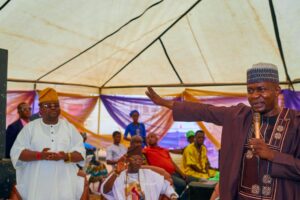
Ajadi made this call on Saturday, March 14, 2026, while speaking with journalists on the sidelines of the Annual Ramadan Lecture organised by the Association of Imams and Alfas, Olodo Ibadan, held at Omolewa Mosque, along Kumapayi in Olodo area of Ibadan.
The PDP gubernatorial aspirant, who was specially invited by the chief host of the event, Alhaji Abdul Lateef Sulaiman Adigun, popularly known as Konkonbilo, said the lecture offered important lessons that political leaders must emulate in order to deliver people-oriented governance.

“The guest lecturer has done justice to the topic. The essence of what he discussed is about sacrifice, sincerity, and striving in the cause of Allah through service to humanity. These are qualities politicians must imbibe if we truly want good governance in our country,” Ajadi said.
He added that leadership should be seen as a trust that must be used to improve the lives of the people rather than for personal gain.

“If politicians can practise this important aspect of Allah’s teachings, especially striving with their resources and influence for the benefit of the people, Nigeria will experience better governance and meaningful development,” he added.
READ ALSO:Ajadi, Sheikh Sannu Sheu Charge Politicians on Good Governance
Ajadi further noted that religious gatherings like Ramadan lectures serve as moral compasses for leaders by constantly reminding them of their responsibilities before God and society.
“Programmes like this are important because they remind us that leadership is a responsibility before God. It teaches that power should be used to uplift the people and not to serve personal interests,” he said.

Earlier in his lecture, the guest lecturer, Alhaji Sheikh Ismail Oke Al-Fiditi, spoke extensively on the theme “Essence of Jihad (Pataki Igbiyanju si Oju Ona t’Olorun)”, where he described jihad as a spiritual struggle through faith, personal sacrifice, and commitment to righteous causes rather than violence as often misconceived.
Quoting from the Holy Qur’an, the Islamic scholar said: “O you who believe! Shall I inform you of a trade that will save you from a painful torment? That you believe in Allah and His Messenger, and strive in the cause of Allah with your possessions and yourselves. That is best for you, if you only knew.”

He added that Allah promises forgiveness and eternal rewards for those who remain steadfast.
“Allah will forgive their sins and admit them into gardens beneath which rivers flow and beautiful mansions in the Gardens of Eden. That is the supreme success,” he said.
Sheikh Al-Fiditi emphasised that one of the most practical demonstrations of jihad is using one’s wealth and influence to support humanitarian causes and national development.
“Whoever uses his or her resources for humanitarian services, to assist the needy, or for the development of society for Allah’s sake will not witness sorrow both on earth and on the Day of Resurrection,” he stated.
In his remarks, the chief host, Alhaji Abdul Lateef Sulaiman Adigun (Konkonbilo), who holds the titles of Aare Musulumi of Egbeda/Ajorosun and Aare Arowosadinni of Ibadanland, said the annual lecture was part of efforts to promote moral values, unity, and peaceful coexistence during the holy month of Ramadan.
He noted that the initiative was also aimed at correcting misconceptions about jihad while encouraging Muslims to focus on personal development, charity, and societal progress.
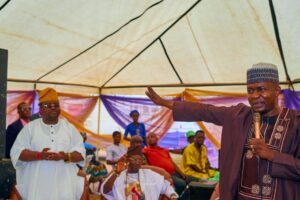
The event attracted Islamic scholars, community leaders, political stakeholders, and residents, and also featured special prayers for peace, stability, and progress in Oyo State and Nigeria at large.
READ ALSO:Ex-NNPP Chieftain Damilare Set to Join APC at 40
Participants at the lecture noted that religious teachings must translate into practical actions capable of promoting ethical leadership, social justice, and national development.