By Ibrahim Kegbegbe
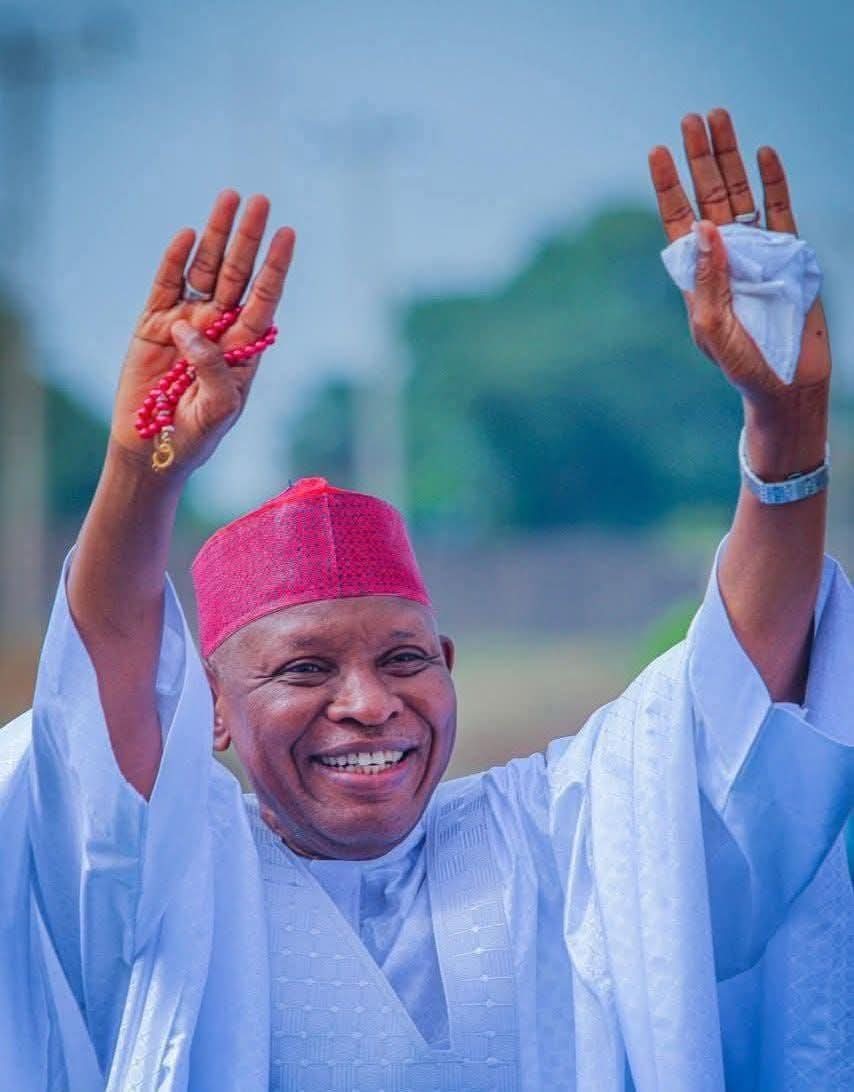
Politics rarely announces its endgame in advance. It whispers, signals, leaks—and only much later do the patterns become clear. The recent report by Daily Nigerian that Kano State Governor, Abba Kabir Yusuf, may defect from the New Nigeria People’s Party (NNPP) to the All Progressives Congress (APC) in the first week of January 2026 is one such whisper that forces a retrospective interrogation of political choices made long before now.
If the rumour materialises, it will not merely be another high-profile defection in Nigeria’s fluid political terrain; it will raise an uncomfortable but unavoidable question: did those who exited the NNPP earlier—particularly in the Southwest—see the collapse coming before the rest of the country did?
The NNPP: Built Around a Man, Not an Institution
From inception, the NNPP was less a conventional political party and more a political movement anchored around one towering figure—Rabiu Musa Kwankwaso. Its stunning performance in the 2023 elections, especially in Kano State where Abba Yusuf emerged governor, gave the impression of a party ready to grow into a national force.
But beneath the surface, cracks were already visible.
Outside Kano and parts of the North-West, NNPP struggled to build enduring structures. In the Southwest, the party’s presence was largely symbolic—sustained more by personal ambition and protest politics than by ideological cohesion or grassroots penetration.
Unlike the APC and PDP, NNPP lacked internal conflict-resolution mechanisms, deep financial war chests, and a national bargaining culture that protects stakeholders when power equations shift.
The Southwest Exodus: Cowardice or Political Foresight?
Between late 2023 and mid-2025, several NNPP stalwarts in the Southwest quietly—or loudly—walked away from the party.
Some defected to the PDP, citing ideological alignment and better prospects. Others crossed over to the APC, arguing that governance and access to federal power mattered more than symbolic opposition. A third group simply abandoned partisan politics altogether, choosing silence over what they described as internal irrelevance.
At the time, these moves were framed by NNPP loyalists as betrayal, impatience, or desperation.
But politics is cruel to premature judgments.
If Abba Yusuf—the only sitting NNPP governor in Nigeria—is truly preparing to defect, then history may yet vindicate those early exits. Their decisions may not have been acts of disloyalty, but rather political survival instincts in a party showing signs of strategic exhaustion.
A Party With One Governor Is Always Vulnerable
In Nigerian politics, governors are not just administrators; they are party financiers, negotiators, and power brokers. A party with only one governor is perpetually vulnerable to federal pressure, elite realignment, and internal implosion.
The reported plan for Abba Yusuf to defect without Kwankwaso—and allegedly sacrifice his deputy to appease APC interests—speaks volumes about the limits of NNPP’s bargaining power.
If confirmed, it would underscore a harsh reality: NNPP may have won Kano in 2023, but it never truly captured power.
The Kwankwaso Factor: Strength or Structural Weakness?
Kwankwaso remains a formidable political brand, but brands alone cannot sustain parties indefinitely. NNPP’s overdependence on one leader meant that once internal disagreements surfaced, there were no alternative centres of gravity to stabilise the platform.
In the Southwest especially, many NNPP politicians complained—off record—of exclusion from meaningful decision-making, lack of federal-level strategy, and an absence of clear electoral pathways beyond protest candidacies.
When ambition meets uncertainty, politicians rarely wait to be stranded.
So, Did They Know?
To ask whether those who left NNPP earlier knew Abba Yusuf would defect may be simplistic. Politics is not prophecy.
But they may have understood the signs:
a party without federal leverage,
a single-governor structure,
internal disagreements between leadership and elected officials,
and a growing sense that NNPP’s moment may have peaked in 2023.
In Nigerian politics, foresight often masquerades as betrayal—until events catch up.
READ ALSO:Makinde Pledges ₦500m for Bishop Phillips Academy
NNPP at a Crossroads
If Abba Yusuf defects, NNPP will be reduced to a party without executive power at the state level—a devastating blow to its national relevance ahead of 2027.
And when that happens, history will likely be kinder to those who exited early than to those who stayed loyal too long.
The real tragedy, however, is not defections. It is the failure of Nigerian political parties to evolve beyond personalities into institutions capable of surviving ambition, disagreement, and time.
READ ALSO:When Prophecy Becomes Anti-Patriotism in Nigerian Football
Until that changes, today’s “traitors” will continue to become tomorrow’s “realists.”
Ibrahim Taofeek Kegbegbe is a journalist and a public affairs analyst