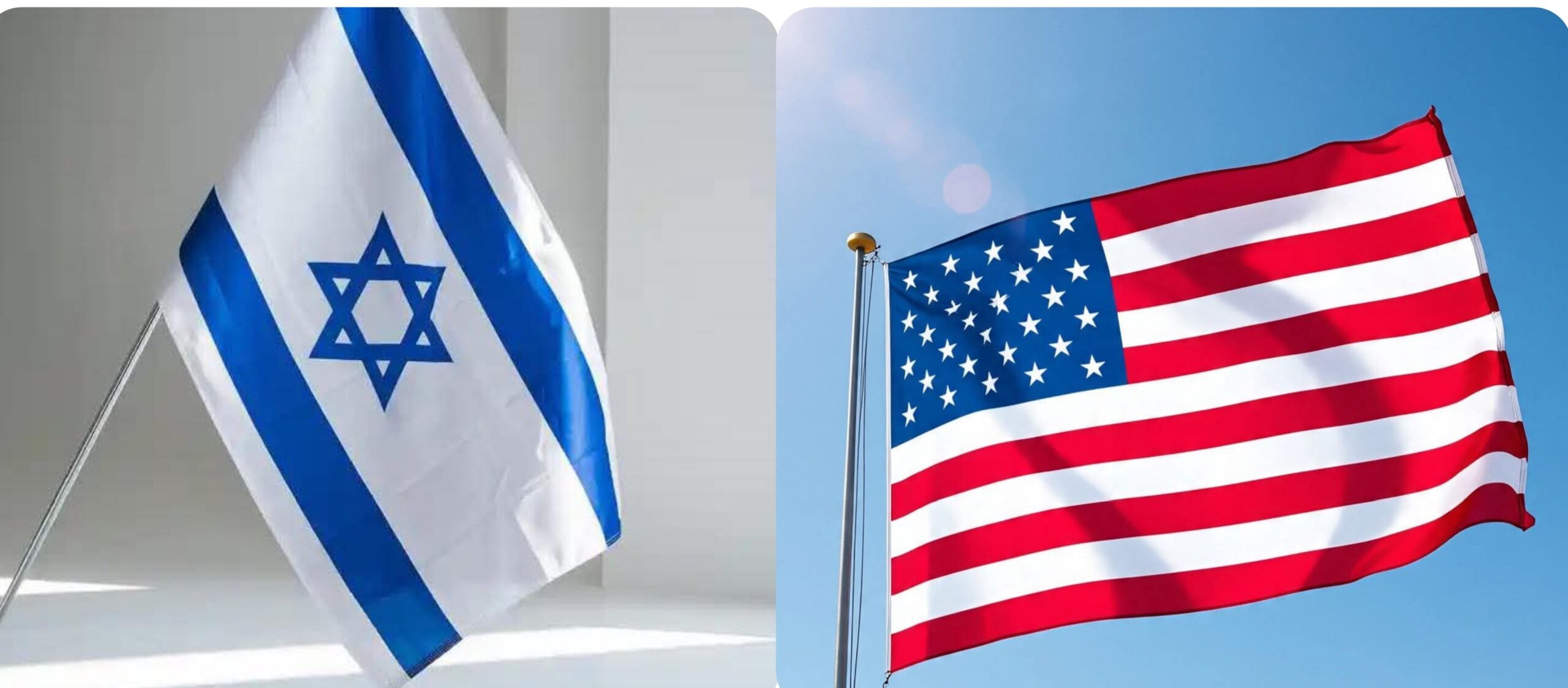
–Disu Kamor, Executive Chairman, Muslim Public Affairs Centre (MPAC)
The United States has a long record of acting on its own on the world stage—often without a United Nations mandate. From early “gun‑boat” interventions in Latin America to recent military strikes and sanctions, these unilateral moves have repeatedly tested the UN’s authority and fueled regional instability. When Washington bypasses multilateral channels, it sets a precedent that other nations can follow, eroding collective security frameworks and pushing nations to seek self‑help measures outside traditional alliances.
Even before the United Nations existed, Washington’s “Manifest Destiny” and the Monroe Doctrine justified interventions in Latin America and the Caribbean, setting a pattern of “police‑power” actions that prioritized U.S. interests over sovereign equality. The Roosevelt Corollary (early 1900s) turned that doctrine into a license to intervene in countries such as Cuba, Panama, Nicaragua, Haiti and the Dominican Republic, often with troops on the ground to protect “American commerce” or “stability.” These actions sowed long‑term resentment and created a perception that the United States would use force whenever its economic or strategic goals were at stake.
During the Cold War, unilateralism took a more covert form. The CIA, with occasional State Department support, orchestrated coups and supported insurgencies against governments deemed “communist” or “unfriendly” to U.S. business interests. Notable examples include the 1953 overthrow of democratically elected Iran’s Prime Minister Mohammad Mosaddegh, the 1954 Guatemalan coup that toppled Jacobo Árbenz, and the 1973 Chilean coup against Salvador Allende. While framed as containing communism, these operations often replaced democratic or nationalist leaders with authoritarian regimes, destabilizing entire regions and fueling anti‑American sentiment.
The 1990s and 2000s saw a shift to overt military action without UN Security Council authorization. The 2003 invasion of Iraq, justified on alleged weapons‑of‑mass‑destruction claims, proceeded despite a lack of UN mandate and divided world opinion. Critics point out that the U.S.’ “coalition of the willing” approach weakened the UN’s role as the primary arbiter of international peace and set a precedent for other powers to act without collective approval. Earlier, the 1999 NATO bombing of Yugoslavia (over Kosovo) and the 2011 Libya intervention also raised questions about the legitimacy of using force outside UN channels.
Israel’s strategic partnership with the United States adds another layer to this dynamic. Israeli regional ambitions for military domination, its geopolitical agenda and policy objectives in several global regions frequently intersect with U.S. decision‑making, sometimes prompting Washington to take actions that align with Israeli interests even when they conflict with international consensus. A few examples will illustrate this fact.
Firstly, Israel’s ongoing settlement expansion and colonisation operations in the Palestinian territories have been repeatedly condemned by UN General Assembly resolutions and by human‑rights bodies, including some within Israel, as violations of international law. When the United States shields Israel from UN Security Council criticism—by using its veto power or by providing military aid despite alleged violations and clear indictment of war crimes by the International Court of Justice—it enables Israel to continue its Zionist policies without any fear of being held accountable. This protection, mostly bought through the powerful Israeli Lobby, the major ones being American Israel Public Affairs Committee (AIPAC), J Street, Christian United for Israel (CUFI) and Zionist Organization of America, embolden Israel to act unilaterally, while simultaneously pressuring the U.S. to adopt a similar stance, thereby weakening the UN’s ability to enforce its own resolutions.
Secondly, the United States’ pattern of acting outside of United Nations mandates showed up clearly in its recent Venezuela policy. Since 2015, Washington has imposed a cascade of economic sanctions, travel bans, and asset freezes on Venezuelan officials and state‑owned entities, measures that many Latin‑American governments have called “unilateral coercive measures against International Law.” These sanctions have been linked by some analysts to a sharp decline in oil production and to hardships for ordinary Venezuelans, illustrating how economic pressure can serve as a form of “bullying” without a UN‑backed mandate.
In 2025, with clear Israel presence and participation, the pressure escalated to direct military steps. The U.S. Treasury added new sanctions on Maduro’s family and on six vessels linked to Venezuelan oil shipments, while the State Department raised the reward for Maduro’s capture to $25 million. Simultaneously, the U.S. began a large‑scale naval buildup in the Caribbean, deploying more than 11,000 troops, multiple warships, and dozens of aircraft under “Operation Southern Spear.” The operation included at least 26 known airstrikes on vessels labeled “narco‑terrorist” and culminated in a January 2026 raid that captured President Nicolás Maduro and his wife, with U.S. officials stating they would “run the country until a safe, proper and judicious transition” could be arranged. UN human‑rights experts have condemned these actions as violations of the UN Charter, warning that the use of lethal force in international waters and preparations for covert military action breach international law and amount to extrajudicial executions.
These steps—sanctions, a massive military buildup, and an outright capture of the President of a UN member state—highlight three hallmarks of U.S. unilateralism and militarism: economic coercion, military intimidation and direct intervention.
Thirdly, on 26th of December 2025, a day after Prime Minister Benjamin Netanyahu made a public declaration to protect Christians eveywhere (the same man that had recently destroyed many historic churches, killing worshippers inside them, in Palestine including Saint Porphyrius Orthodox Church (the oldest church in Gaza, dating to the 5th century), and the Holy Family Catholic Church (the only Roman‑Catholic church in Gaza, built in 1974), United States launched air‑strike on an area in Sokoto State, using Tomahawk missiles from a U.S. Navy warship (likely the USS Paul Ignatius) and MQ‑9 Reaper drones. The attack targeted allegedly IS‑linked sites in the Bauni forest of Tangaza, camps of the terrorist group, Islamic State’s Sahel Province (ISSP), and associated Lakurawa “bandit” groups. The air-strike was announced by President Donald Trump and publicly framed by U.S. Defense Secretary Pete Hegseth as a response to “targeting and viciously killing, primarily, innocent Christians” in the region. Nigerian authorities (information minister Mohammed Idris Malagi and foreign minister Yusuf Maitama Tuggar) qucikly claimed that it was a joint operation with “precision hits” on terrorist targets, emphasizing it was not intended to protect any specific religion. The intriguing, if not contradictory, statements did not end there. U.S. officials said “multiple” militants were killed; Nigerian officials said no civilian deaths, though debris from mis‑fired munitions landed in villages as far as Jabo, Zugurma and Offa in Kwara State, damaging farmland and structures. So far, there have been no video or photographs released to show the air-strike actually killed millitants, terrorists and bandits.
Lastly, Israel has been issuing repeated warnings of possible military action against Iran, even after the 13 June 2025 strike that started the 12‑day war and left Tel Aviv heavily damaged, prompting Israel to request U.S. support. Coupled with recent warnings were visible U.S. military movements, such as the deployment of the USS Abraham Lincoln Carrier Strike Group to the Middle East. Israeli officials then publicly threatened “unprecedented” force if Iran responds to these provocations, signaling a readiness to act in a way that can push the United States into a supportive or, most preferably, pre‑emptive role. Moreover, credible reports suggest that Israel provided direct assistance to groups inside Iran that are engaged in violent street actions, shooting policemen, healcare workers and burning down government buildings and places of worship, with the aim of destabilising the Iranian government and potentially facilitating regime change. Amidst such violence. Mike Pompeo, the former U.S. Secretary of State, sent a revealing New Year greeting to the rioters: “Happy New Year to every Iranian in the streets. Also to every Mossad agent walking beside them.” Mossad, officially called the Institute for Intelligence and Special Operations, is Israel’s national foreign‑intelligence, and Iran has shown evidence to the world, how Mossad inflitrated the peaceful protests, providing arms and intelligence to those killing ordinary Iranians. agency. The street violence in Iran, which was publicly encouraged by President Donald Trump, Israeli Prime Minister Benjamin Netanyahu, former Secretary of State Mike Pompeo and other U.S. and Israeli officials, unfolded at the same time that ICE agents in the United States were conducting aggressive operations against unarmed American protesters, which ended up in the killing by ICE of a 37‑year‑old woman, Renee Nicole Good, who were demonstrating against ICE’s heavy‑handed immigration enforcement. Such support, when aligned with U.S. suffocating sanctions over decades that have made poverty widespread in Iran, ruining its economy, and covert operations, can create a feedback loop where each side’s actions reinforce the other’s unilateral posture.
These examples illustrate how Israel’s security policies are shaping U.S. unilateral actions, and how both countries’ joint approach—often at odds with UN resolutions and international humanitarian principles— erodes global stability, contributes to heightened tensions and a drift toward self‑reliance among other states. The resulting environment makes it harder for the UN to mediate conflicts, and it encourages regional actors to pursue their own security arrangements outside established global frameworks.
However, unilateralism extends beyond troops. The United States has repeatedly walked away from key international agreements: withdrawing from the Anti‑Ballistic Missile Treaty in 2002, rejecting the Kyoto Protocol, and pulling out of the Paris Climate Accord. These moves signaled that Washington would prioritize national calculations over collective climate action, hampering global cooperation on existential threats. More recently, the imposition of tariffs on steel, aluminum and other goods—often justified on “national security” grounds—has triggered trade disputes and undermined the World Trade Organization’s dispute‑settlement mechanism.
Each of these actions chips away at the authority of the United Nations and other multilateral bodies. When a permanent Security Council member bypasses the UN, it “undercuts the organization’s ability to enforce fair trade practices and maintain international peace and security,” as noted by analysts (US Unilateralism in the New World Order: Implications and Examples, PolSci Institute, November 23, 2025). UN Secretary‑General António Guterres has warned that such behavior threatens the UN Charter’s core principles, including the sovereign equality of states, and risks creating a world where powerful nations act with impunity. The result is a growing perception that the UN is “irrelevant” to major powers, prompting smaller states to seek alternative security arrangements, regional blocs, or even self‑help measures outside traditional alliance structures.
When the world’s leading power repeatedly acts alone, other nations feel compelled to protect themselves. Countries may accelerate their own weapons programs, form new regional security pacts, or turn to rival powers for support. This dynamic fuels a “self‑survival” mindset, increasing global tension and making collective problem‑solving more difficult. The recent “Board of Peace” proposal by the United States, seen by many as a parallel structure to the UN, has already sparked concern that it could further fragment international cooperation.
READ ALSO:NNPP Chieftain Abioro Hails Tinubu, Abiodun Over Tongeji Oil Drilling, Olokola Deep Seaport Approval
History shows that unilateral actions, while sometimes achieving short‑term objectives, often generate long‑term instability, erode trust, and weaken the very institutions designed to prevent conflict. A more stable world order requires the United States to re‑engage with multilateral frameworks, respect UN processes, seek ways to free itself from the Israeli Lobby’s chokehold, and work collaboratively on shared challenges such as climate change, nuclear non‑proliferation, violent extremism and global health. Only through genuine partnership can the international community move from a cycle of tension engendered by the current alliance between United States and Israel, which employs extreme violence for global domination, toward lasting peace, global security and stability.