
By Ibrahim Kegbegbe
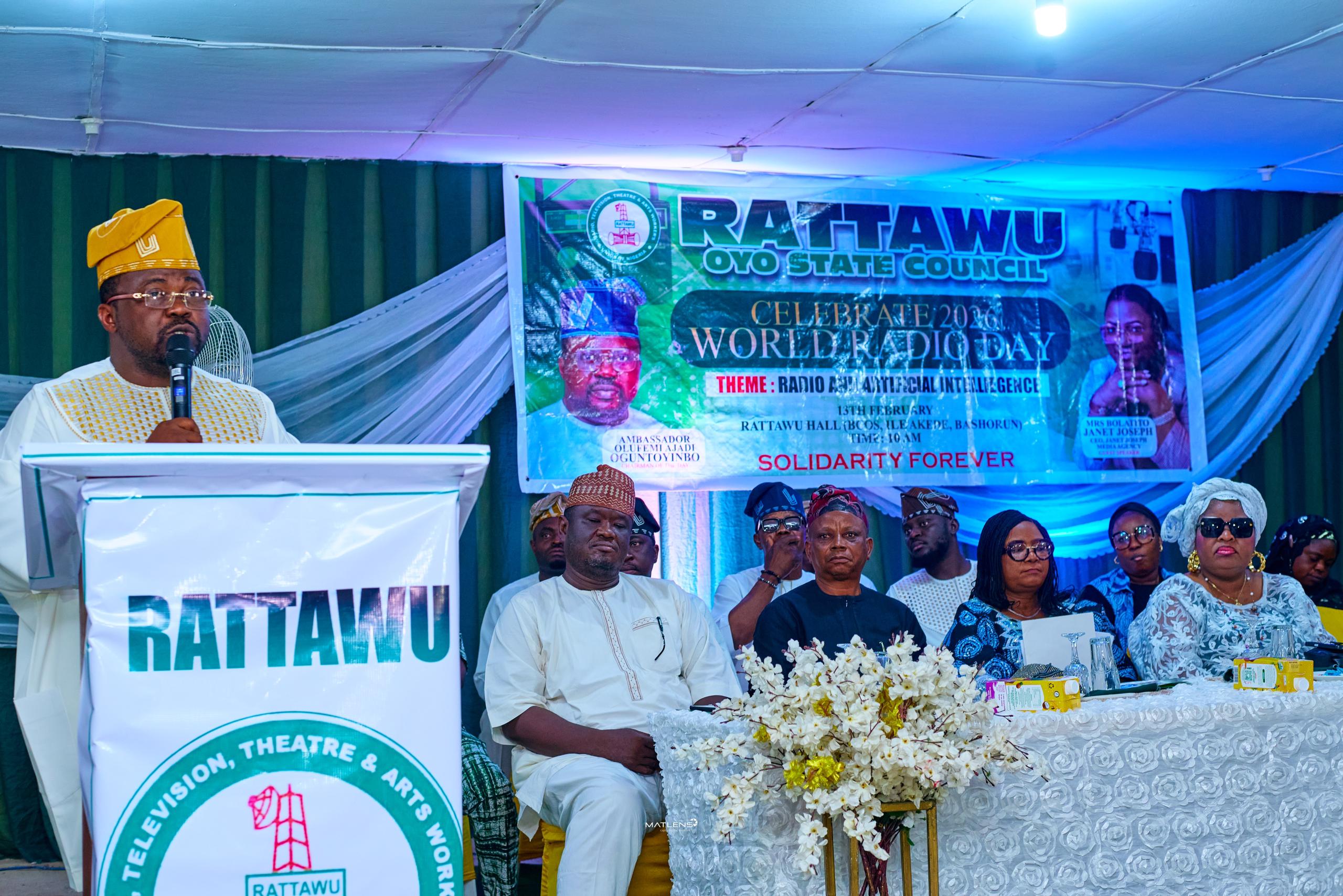
Ibadan — A Peoples Democratic Party (PDP) governorship aspirant in Oyo State, Ambassador Olufemi Ajadi Oguntoyinbo, has described radio as one of the most powerful tools for democratic engagement, public education and social inclusion, stressing that the medium remains unmatched in its ability to reach and unite diverse audiences.
Ajadi made the assertion on Friday in Ibadan while delivering his keynote address as Chairman of the 2026 World Radio Day celebration organised by the Oyo State Council of the Radio, Television, Theatre and Arts Workers Union of Nigeria (RATTAWU).

Describing radio as a bridge between the elite and the grassroots, Ajadi said the medium provides “an ideal platform for democratic discourse, social interaction and the celebration of diversity.”
“Radio remains one of the most powerful communication tools available to humanity. It cuts across social class, literacy level and geography, giving both the privileged and the marginalised a voice in national conversations,” he said.

Speaking on the theme of this year’s celebration, “Radio and Artificial Intelligence,” Ajadi described it as timely, noting that artificial intelligence (AI) is rapidly transforming industries across the world and that Nigeria must not be left behind.
“Artificial intelligence is no longer a futuristic concept; it is already shaping how we work, communicate and produce content. The broadcasting industry cannot afford to ignore this reality,” Ajadi stated.
Citing global data from UNESCO, Ajadi noted that radio remains the most widely consumed medium worldwide, accounting for about 86 per cent of total listening time among adults aged 25 to 54.

“Radio reaches people in metropolitan centres and in the most remote communities. Its languages are understood by both the literate and the illiterate, making it a truly inclusive medium,” he said.
He urged radio practitioners to ensure balanced and representative programming that reflects the realities of both urban populations and isolated communities.
The Merit Newspaper reports that Ajadi also highlighted the unique advantages of radio, including its affordability, portability and accessibility.
“Radio is everywhere — even on our mobile phones. It educates, informs and promotes freedom of expression across cultures. Despite being over 100 years old, it remains one of the most reliable ways to exchange information and save lives during natural or man-made disasters,” he noted.
Addressing concerns that AI could erode creativity and human connection in broadcasting, Ajadi disagreed, urging practitioners to see the technology as a creative partner rather than a threat.
“To some people, AI signals the death of human creativity, but I disagree. Broadcasters should use AI to enhance creativity, not surrender to it. When deployed with care, AI can unlock innovation and lower barriers to entry in radio production,” he said.
According to him, AI can help radio stations reduce routine tasks, improve research and fact-checking, gain deeper audience insights, tailor advertising content and amplify under-represented voices without compromising quality.
However, Ajadi cautioned that effective use of AI requires proper understanding and ethical application.
READ ALSO:Makinde Vows Zero Tolerance for Gender-Based Violence in Oyo
“AI should not replace creativity; it should enhance it. Media practitioners must take time to learn and understand the technology. Only then can it be adapted meaningfully to radio production,” he advised.

He reiterated by urging broadcasters to adopt a thoughtful and strategic approach to AI, ensuring that technology serves public interest, strengthens democratic values and sustains the future of radio in Nigeria.