By The Merit Newspaper – International Desk
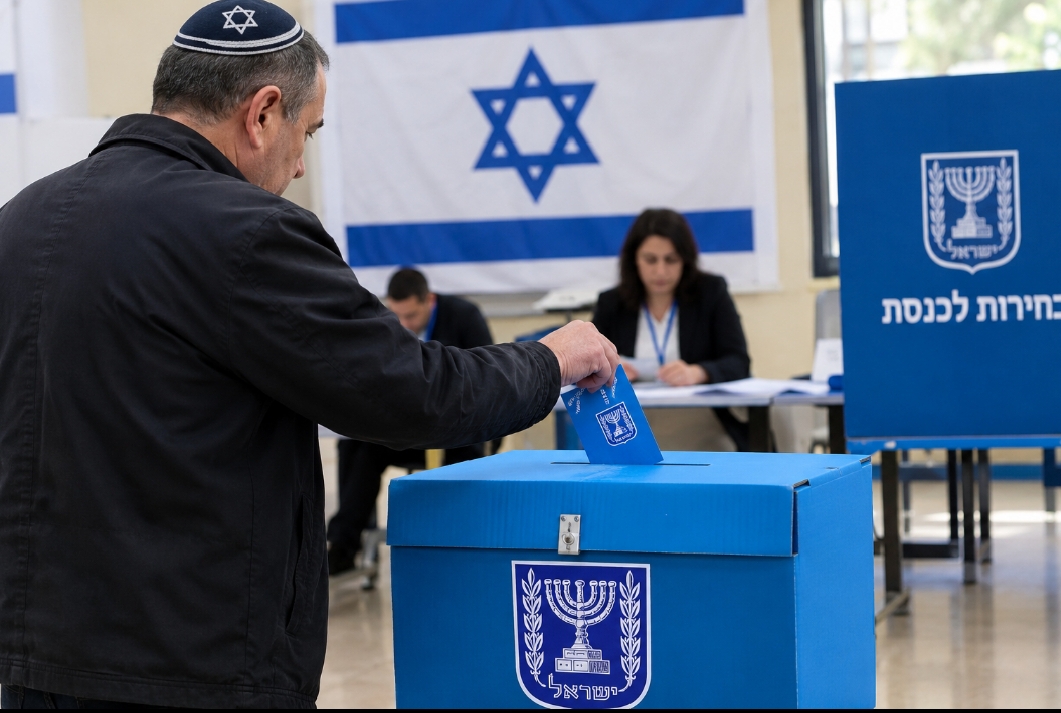
JERUSALEM, October 27, 2026 — Israeli voters are heading to the polls on Tuesday in a closely contested parliamentary election that could reshape the country’s political leadership, with Prime Minister Benjamin Netanyahu seeking to retain power against an opposition alliance led by former military chief Gadi Eisenkot.

The election, the first since the Hamas-led attacks on Israel on October 7, 2023, is being viewed as a major test of public confidence in Netanyahu’s leadership, particularly over national security, the government’s handling of the attacks and the wars that followed.
More than 7.3 million Israelis are eligible to vote in the election to select representatives for the 120-member Knesset, Israel’s parliament. Voting is scheduled to run from 7 a.m. to 10 p.m. local time, with initial exit polls expected after polling stations close.
Netanyahu’s Likud party is leading a coalition of right-wing, far-right and ultra-Orthodox parties, while Eisenkot’s opposition alliance brings together political groups with differing ideological positions but a common objective of replacing the current government.
The contest is shaped by competing arguments over security, democratic accountability, military-service exemptions for ultra-Orthodox Jewish men and the direction of Israel’s domestic and foreign policies.
Pre-election opinion polls indicate a tight race, with neither the Netanyahu-led bloc nor the opposition projected to secure the 61 seats required for a parliamentary majority. This raises the possibility that smaller parties and negotiations among political factions will determine who forms the next government.
Under Israel’s proportional representation system, voters choose political party lists rather than directly electing a prime minister. Consequently, winning the largest number of seats does not automatically guarantee the right to govern; a prospective prime minister must secure sufficient parliamentary support to establish a government.
The Merit Newspaper reports that the election’s outcome also carries implications beyond Israel. The next administration will face continuing regional security challenges, international scrutiny over the conflicts involving Israel and difficult decisions concerning the country’s diplomatic relationships.
READ ALSO:Harry Kane Wins 2026 Ballon d’Or, Putellas Claims Third
Although initial indications may emerge after voting closes, the final political outcome could take days or weeks to become clear if the results produce a fragmented parliament. Until a new government is formed, the election may leave Israel facing further political uncertainty.
READ ALSO:Ajadi Joins Dignitaries to Honour Femi Aina’s Late Mother at Final Burial
As voting continues, the central question is whether Netanyahu can assemble enough parliamentary support to remain in office or whether his opponents can overcome their differences and establish an alternative government.