By Ibrahim Kegbegbe
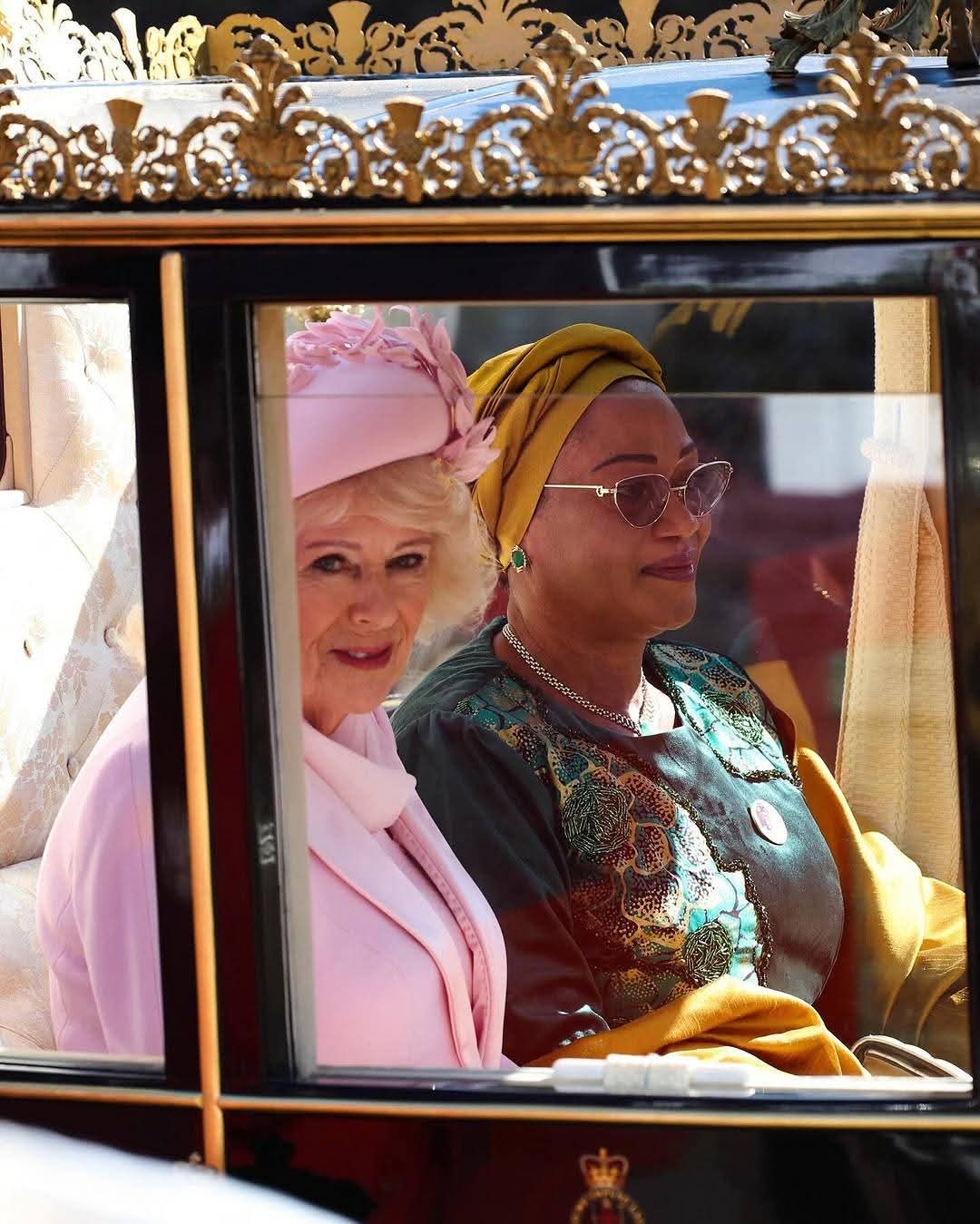
At first glance, the lives of Queen Camilla of the United Kingdom and Nigeria’s First Lady, Oluremi Tinubu, appear shaped by very different worlds—one defined by centuries of monarchy and aristocratic tradition, the other by the often turbulent terrain of African democratic politics.

Yet a closer examination reveals several fascinating similarities between the two influential women—parallels that are rarely discussed but which help explain how both have emerged as stabilising figures behind two of the most powerful political offices in their respective countries.
Both women represent a modern evolution of what it means to be the spouse of a national leader—no longer ceremonial figures confined to symbolic roles, but strategic partners with their own networks of influence, policy interests, and carefully cultivated public identities.
Long Roads to National Prominence
One of the most striking similarities between Queen Camilla, wife of King Charles III, and Oluremi Tinubu, wife of Nigerian President Bola Ahmed Tinubu, is that neither arrived suddenly at national prominence.
Their journeys were gradual, shaped by decades of public observation, political pressures, and personal reinvention.
For Camilla, public acceptance did not come easily. For years, she remained one of the most scrutinised figures within the British monarchy following the breakdown of Charles’ marriage to Diana, Princess of Wales. However, through consistent public engagements, charity work, and a carefully managed public image, she gradually transformed public perception from controversy to acceptance, culminating in her recognition as Queen Consort in 2022.
READ ALSO:Opinion: What Trump’s Praise of Remi Tinubu Really Signals
Oluremi Tinubu’s journey followed a different but equally demanding path. While often described simply as the President’s wife, her political trajectory shows a woman who built her own credentials. As a three-term senator representing Lagos Central, she developed a reputation for discipline, constituency engagement, and advocacy for women and youth development long before becoming First Lady.
Managing Public Perception and Political Pressure
Another little-known similarity lies in how both women navigated intense public scrutiny.
Camilla’s experience with British tabloid culture is well documented. Her transformation from a controversial royal figure into a respected Queen Consort is often cited by royal analysts as one of the most successful reputation rehabilitations in modern royal history.
In Nigeria, Oluremi Tinubu has also had to navigate the intense scrutiny that comes with being associated with one of the country’s most powerful and sometimes polarising political figures. Political observers note that she has managed this through a strategy of controlled public communication, faith-driven messaging, and issue-based interventions rather than partisan confrontation.
READ ALSO:Oluremi Tinubu at 65: A Life of Service
Soft Power Through Social Intervention
An investigative look at their work shows another shared strategy: the use of what analysts call soft power influence.
Rather than direct political authority, both women have focused on social causes that allow them to shape national conversations without stepping into executive decision-making spaces.
Queen Camilla’s advocacy for literacy, survivors of domestic violence, and healthcare awareness reflects how the British royal family increasingly uses social campaigns to maintain relevance in modern society.
Oluremi Tinubu’s interventions through social programmes such as the Renewed Hope Initiative similarly reflect how Nigerian First Ladies often create parallel intervention platforms addressing poverty, education, and women empowerment—areas where government structures sometimes struggle to respond quickly.
Faith, Duty, and Institutional Tradition
Another interesting convergence is their alignment with institutional values rooted in tradition.
Camilla’s public life is guided by the traditions of the Church of England and the constitutional expectations of the British monarchy, where duty and continuity remain central values.
Oluremi Tinubu’s public persona similarly reflects strong religious conviction shaped by her Christian faith and pastoral background. Her speeches frequently emphasise moral leadership, compassion, and social responsibility—values that resonate strongly within Nigeria’s religious political culture.
Influence Without Formal Executive Authority
Perhaps the most significant similarity between the two women lies in a rarely discussed reality of power: influence without official authority.
Neither Queen Camilla nor Oluremi Tinubu holds constitutional executive power, yet both occupy positions that provide proximity to decision-making environments. Political historians often describe such positions as informal advisory influence—a role where trust, experience, and personal relationships can shape perspectives behind closed doors.
While little is publicly documented about the extent of their private advisory roles, it is widely understood in both royal and political systems that trusted spouses often serve as sounding boards during moments of leadership pressure.
Reinvention and Endurance
Their stories also share a narrative of endurance.
Camilla’s public life reflects a long journey from socialite to royal spouse, to Queen Consort—an evolution requiring patience and image rebuilding.
Oluremi Tinubu’s story reflects a transition from educator and pastor to legislator and now First Lady, showing a similar pattern of gradual expansion of influence.
Both cases demonstrate how longevity in public life often depends not on dramatic moments but on consistency and strategic reinvention.
Redefining the Role of Leaders’ Spouses
Globally, the roles of leaders’ spouses are changing. From Washington to London to Abuja, they are increasingly expected to be advocates, policy influencers, and social campaigners.
Queen Camilla and Oluremi Tinubu fit into this emerging global pattern where public expectations now go beyond ceremonial appearances to measurable social impact.
Their experiences suggest that the modern spouse of a leader is becoming a hybrid figure—part diplomat, part advocate, and part institutional stabiliser.
Quiet Influence in the Architecture of Power
Though they operate in different political systems, the similarities between Queen Camilla and Oluremi Tinubu highlight a universal truth about leadership: power is often supported by unseen structures of trust and personal partnership.
Their stories are not simply about marriage to powerful men, but about adaptation, resilience, and the subtle exercise of influence in environments where visibility is high but formal authority is limited.
READ ALSO:Nigerians Await Sultan After Saudi Eid Declaration
In different ways, both women demonstrate how influence can be exercised not through official titles alone, but through persistence, credibility, and the ability to evolve with the demands of public life.
Their parallel journeys ultimately reveal a shared lesson from two continents: that behind enduring leadership is often a partner who understands the burden of power and the discipline required to sustain it.