By Ibrahim Kegbegbe
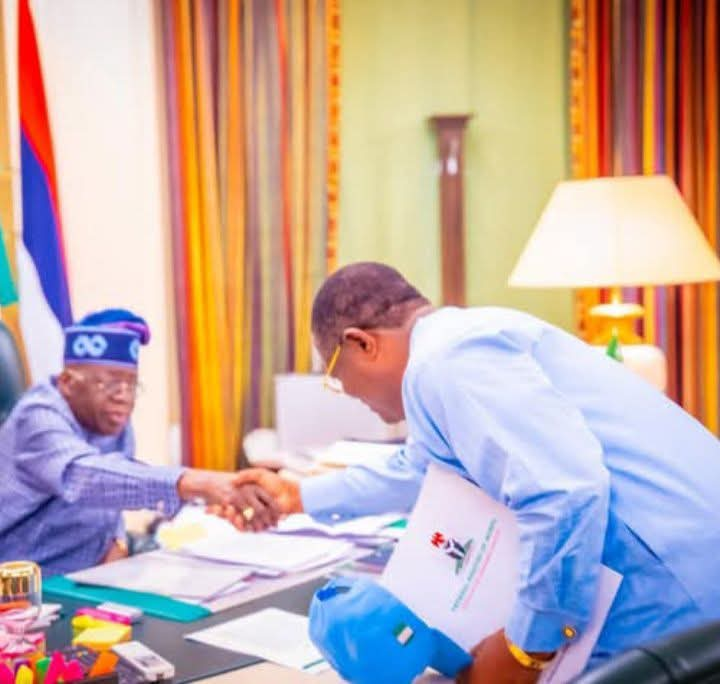
President Bola Ahmed Tinubu has approved the reconstruction of key federal highways in Niger State and the extension of a strategic coastal road project in Rivers State, in a move aimed at strengthening transportation infrastructure and stimulating economic growth across Nigeria.

The approvals, announced on Thursday by the Federal Ministry of Works, cover three major road corridors in Niger State — the Mokwa–Bida Road (120km), Mokwa–Makera Road (63km), and Bida–Lambata Road (123.5km) — spanning a total distance of 306.5 kilometres.
According to a statement issued by the Senior Special Assistant to the Minister of Works (Media), Francis Nwaze, the projects will be reconstructed using reinforced concrete pavement technology, a construction method designed to enhance durability, reduce maintenance costs, and withstand heavy vehicular traffic common along major economic routes.
Strengthening Economic Corridors
The Honourable Minister of Works, David Umahi, described the presidential approvals as strategic interventions targeted at improving national mobility and unlocking economic opportunities in the North-Central region.
Umahi noted that the affected roads serve as critical links connecting agricultural hubs, commercial centres, and interstate transport networks, particularly routes that facilitate movement between northern and southern Nigeria.
“These projects fall within vital national economic corridors. Their reconstruction will significantly improve connectivity, ease transportation challenges, and promote trade and regional development,” the minister stated.
Transportation experts have long identified the Mokwa–Bida axis as one of Nigeria’s busiest transit corridors, serving thousands of commuters, haulage operators, and agricultural producers moving goods toward markets in Abuja, Lagos, and other commercial centres.
Expansion of Bodo–Bonny Road
Beyond Niger State, President Tinubu also approved the extension of the Bodo–Bonny Road project in Rivers State to link directly with the East–West Road — one of the most strategic highways in Nigeria’s oil-producing Niger Delta region.
READ ALSO:Makinde Talks Successor, Raises Gratuities, Gifts Buses, SUV at Ramadan
The expanded project will be constructed as a dual carriageway using concrete pavement and equipped with solar-powered street lighting, reflecting the Federal Government’s increasing adoption of sustainable infrastructure solutions.
The ministry disclosed that the project would be executed through a competitive bidding process, aimed at ensuring transparency, cost efficiency, and adherence to international construction standards.
The Bodo–Bonny Road has remained a long-awaited infrastructure project expected to end decades of transportation difficulties faced by residents and businesses operating within Bonny Island, a major hub for Nigeria’s oil and gas industry.
Nationwide Infrastructure Drive
Since assuming office in 2023, the Tinubu administration has placed infrastructure renewal at the centre of its economic reform agenda, prioritising road construction, bridge rehabilitation, and logistics networks across Nigeria’s six geopolitical zones.
Umahi expressed appreciation to the President for sustaining investments in road infrastructure despite economic challenges, stressing that quality roads remain essential for national productivity, security operations, and rural development.
He congratulated the governments and people of Niger and Rivers States, as well as Nigerians nationwide, noting that the projects would generate employment opportunities during construction while improving long-term economic prospects.
The minister further called on citizens to continue supporting the administration’s development initiatives, assuring that the Federal Government remains committed to delivering tangible dividends of democracy through modern infrastructure.
READ ALSO:Councillors’ Forum Endorses Tinubu’s 2027 Re-election Bid, Cites Grassroots Reforms
The Merit Newspaper reports that analysts say the latest approvals reinforce the administration’s broader objective of modernising Nigeria’s transportation backbone, improving inter-state commerce, and reducing travel time along major federal highways — a development expected to positively impact businesses, commuters, and investors alike.