
By Ibrahim Kegbegbe
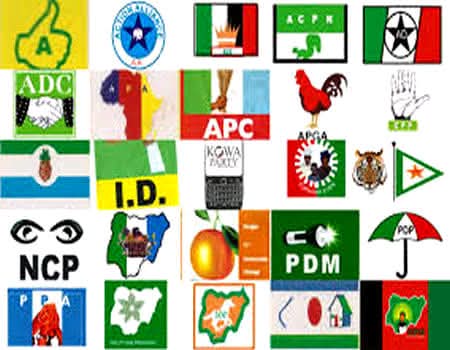
Nigeria’s democracy is witnessing an unusual political migration — one that is fast redefining the country’s multiparty architecture and raising uncomfortable questions about the future of opposition politics.
Today, the political arithmetic of Nigeria’s 36 states tells a compelling story.

The ruling All Progressives Congress (APC) controls 30 state governors.
The opposition landscape looks increasingly fragile:
People’s Democratic Party (PDP) — 3 governors (Bauchi, Oyo, Zamfara)
Labour Party — 1 governor (Abia)
All Progressives Grand Alliance (APGA) — 1 governor (Anambra)
Accord Party — 1 governor (Osun)
African Democratic Congress (ADC) — 0 governors
This distribution is not merely statistical; it is political evidence of a rapidly shrinking opposition space.
Nigeria has never seen defections on this scale since the return to civilian rule in 1999.
Democracy Without Opposition?
Defection is not new in Nigerian politics. Politicians have crossed party lines since the days of the First Republic. But what Nigeria is experiencing today is different in both speed and motivation.
Governors, senators, lawmakers, and influential political stakeholders are abandoning opposition parties almost weekly — not because of ideological disagreements, policy conflicts, or philosophical realignment, but largely for political survival.
The question therefore arises:
Are Nigerian politicians joining parties — or simply joining power?
Democracy thrives on competition. Opposition parties exist not merely to contest elections but to question authority, scrutinise policies, and provide alternative visions of governance.
READ ALSO:BREAKING: ADC South-South Leaders Back Amaechi for 2027 Presidential Ticket — Oyegun
When nearly all political power gravitates toward one party, democracy risks becoming procedural rather than substantive.
Elections may still hold. Ballots may still be cast. But meaningful political choice begins to fade.
The Fear Driving Defections
Behind many defections lies an unspoken political reality: the fear of being isolated from federal power.
Nigeria’s political structure remains heavily centralised. Access to federal resources, appointments, security cooperation, and political influence often depends on alignment with the ruling party at the centre.
Governors understand this calculation.
Remaining in opposition increasingly appears politically expensive.
Joining the ruling party appears safer.
But this survival instinct carries national consequences.
From Multiparty Democracy to Dominant Party System
Political scientists describe systems like this as a dominant-party democracy — where opposition parties exist legally but struggle structurally.
Nigeria now shows early symptoms:
Opposition parties weakened by internal crises
Electoral competition is becoming uneven
Political debates have been reduced to intra-party struggles rather than inter-party contests
Elections are increasingly decided before voters reach the polling units
If defections continue at the present rate, Nigeria may unintentionally drift toward what critics call a soft one-party state.
READ ALSO:BREAKING: Court Affirms Validity of 2025 PDP Convention Held in Ibadan
Not by law.
But by political momentum.
The Irony of Nigerian Politics
Ironically, many politicians now defecting once criticised similar movements when they belonged to opposition parties.
In Nigerian politics, ideology is often temporary, but power is permanent.
Parties rarely differ on economic philosophy, governance models, or national direction. Without ideological foundations, parties become electoral vehicles rather than institutions.
Thus, politicians move easily from opposition to ruling party without explaining policy differences to voters.
The electorate watches elite negotiations while democratic accountability weakens.
Why Nigerians Should Be Concerned
This trend should worry citizens beyond partisan loyalties.
A weak opposition means:
fewer checks on executive power
Reduced policy debate
diminished accountability
growing political complacency
Democracy does not collapse only through coups or constitutional suspension.
Sometimes, it erodes quietly — through political convergence around power.
The Real Question Before 2027
As Nigeria approaches the 2027 general elections, the central democratic question is no longer who will win the elections.
It is whether Nigerians will still have genuine political alternatives.
A democracy where nearly everyone belongs to the ruling party risks becoming an echo chamber.
And history teaches a difficult lesson: nations without strong opposition eventually manufacture a crisis to recreate balance.
Saving Nigeria’s Multiparty Democracy
The solution is not to restrict defections — freedom of association is democratic.
Rather, Nigeria must strengthen institutions:
internal party democracy
ideological clarity among political parties
electoral independence
decentralisation of federal power
Until politics becomes issue-based instead of access-based, defections will continue to follow power rather than principles.
READ ALSO:Fintiri Dumps PDP for APC, Moves Entire Adamawa Political Structure to Ruling Party
Nigeria fought hard to end military one-party dominance.
The danger today is subtler.
Nigeria may not officially declare a one-party state.
But if current political migrations continue unchecked, it may gradually wake up as one.
Ibrahim Taofeek kegbegbe is a Lagos-based journalist and public affairs analyst