By Ibrahim Kegbegbe
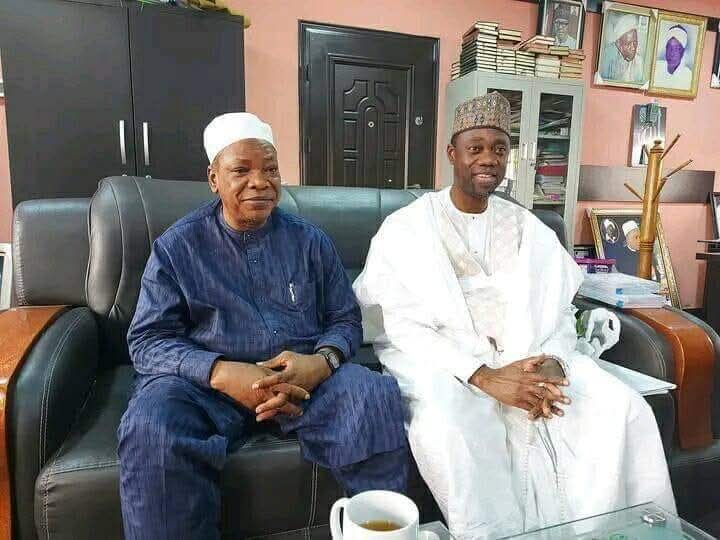
In Islam, reconciliation is not merely encouraged—it is commanded. The Qur’an repeatedly emphasizes peace, forgiveness, and unity among believers as essential foundations of a strong Muslim community. It is therefore painful for many observers within and outside Ilorin to witness the prolonged misunderstanding between two respected Islamic scholars: Sheikh Habeebullah Adam Al‑Ilori and his former student, Sheikh Sulaiman Farooq Onikijipa.

Both scholars are widely revered for their contributions to Islamic scholarship, Da’wah, and moral guidance. Their influence extends beyond Ilorin to the wider Nigerian Muslim community and even the diaspora. This is precisely why their long-standing disagreement continues to generate concern among followers who see them not just as teachers, but as moral exemplars.
When Scholars Disagree, the Ummah Feels the Impact
Islamic history shows that disagreements among scholars are not unusual. However, what distinguishes great Islamic traditions is how such disagreements are managed—with maturity, scholarship, and structured reconciliation mechanisms.
The concern many observers express today is not necessarily that disagreement exists, but that reconciliation efforts appear informal, emotional, and incomplete rather than institutional and thorough.
As Sheikh Habeebullah Adam Al‑Ilori reportedly stated during a Markaz Ramadan Tafsir session in 2025, elders should not merely appeal for silence but should instead create a platform where both parties can openly explain their grievances. His proverb:
“Ilorin kìí parí ìjà, wọ́n máa là ìjà ní”
(“Ilorin people do not end fights through reconciliation; they only separate the fighters temporarily.”)
This statement raises an important sociological question: Are conflicts sometimes managed in Ilorin through temporary peace rather than permanent resolution?
The Role of Traditional and Religious Leadership
Ilorin has always been known for strong traditional and Islamic leadership structures, particularly under the Emirate system led by the Ibrahim Sulu‑Gambari, the Emir of Ilorin. Traditionally, the Emirate Council and respected Islamic elders have played significant roles in conflict mediation.
This raises a legitimate question many followers continue to ask: if the disagreement has lasted this long, should reconciliation not go beyond private appeals and involve structured dialogue supervised by respected neutral authorities?
READ ALSO: Oyo Deputy Gov. Adebayo Lawal, Ajadi Honour Y.K. Abass at Ramadan Lecture
True reconciliation, especially among scholars, often requires:
Honest dialogue
Opportunity for clarification
Accountability where necessary
Mutual understanding
Spiritual mediation
Simply urging parties to “let peace reign” without addressing underlying issues may only postpone tensions rather than resolve them.
The Danger of Unresolved Intellectual and Personal Conflicts
When respected scholars remain divided, the consequences often extend beyond their personal relationship. Followers may form camps. Interpretations may become polarized. Social media narratives may distort realities. Younger students may inherit divisions they do not fully understand.
This is why reconciliation between major religious figures must be handled carefully and transparently—not for sensationalism, but for community healing.
Islam itself provides a model. The Prophet Muhammad (peace be upon him) often encouraged disputing parties to meet face-to-face, clarify misunderstandings, and forgive one another with witnesses present to ensure sincerity and closure.
Beyond Sympathy: The Need for Courageous Mediation
Many well-meaning individuals have prayed for peace between the two scholars. Prayers are important. But history shows that reconciliation also requires courageous mediation.
Community leaders, respected clerics, and traditional authorities must sometimes move beyond diplomacy into structured intervention—bringing both parties together not to determine winners and losers, but to restore brotherhood.
If indeed one of the parties has openly requested a direct dialogue supervised by elders, as widely discussed, then the next logical step would be to create such a platform.
Peace is strongest when it is built on understanding, not avoidance.
A Test of Ilorin’s Reputation as a Center of Islamic Harmony
Ilorin has long been regarded as a city of Islamic learning, discipline, and scholarship. Its reputation as a center of religious harmony is one many believe should be protected through proactive conflict resolution.
This situation therefore presents not just a personal matter between teacher and student, but a moral test for community leadership.
Can Ilorin demonstrate a model of reconciliation worthy of its Islamic heritage?
The Path Forward
If genuine reconciliation is to happen, certain steps may be necessary:
Neutral mediation by respected Islamic elders.
A private but structured dialogue between both scholars.
Clarification of disputed issues.
Mutual forgiveness where possible.
A public demonstration of unity to discourage division among followers.
Such steps would not only restore peace between two individuals but would also send a powerful message about Islamic conflict resolution in modern Nigeria.
A Prayer and a Hope
Ultimately, beyond analysis and opinion, what many sincere observers desire is simple: peace between two men who have both contributed immensely to Islamic knowledge.
READ ALSO:Markaz Ramadan Lecture: The Only Place Where Extremism Has No Breeding Ground
May Allah restore love where there is distance, understanding where there is disagreement, and brotherhood where there is tension.
And perhaps most importantly, may this moment become not a story of division, but a lasting example of how great scholars resolve differences—with dignity, courage, and faith.
Ibrahim Taofeek Kegbegbe is a Lagos-based journalist and public affairs analyst with interest in socio-political and religious issues.