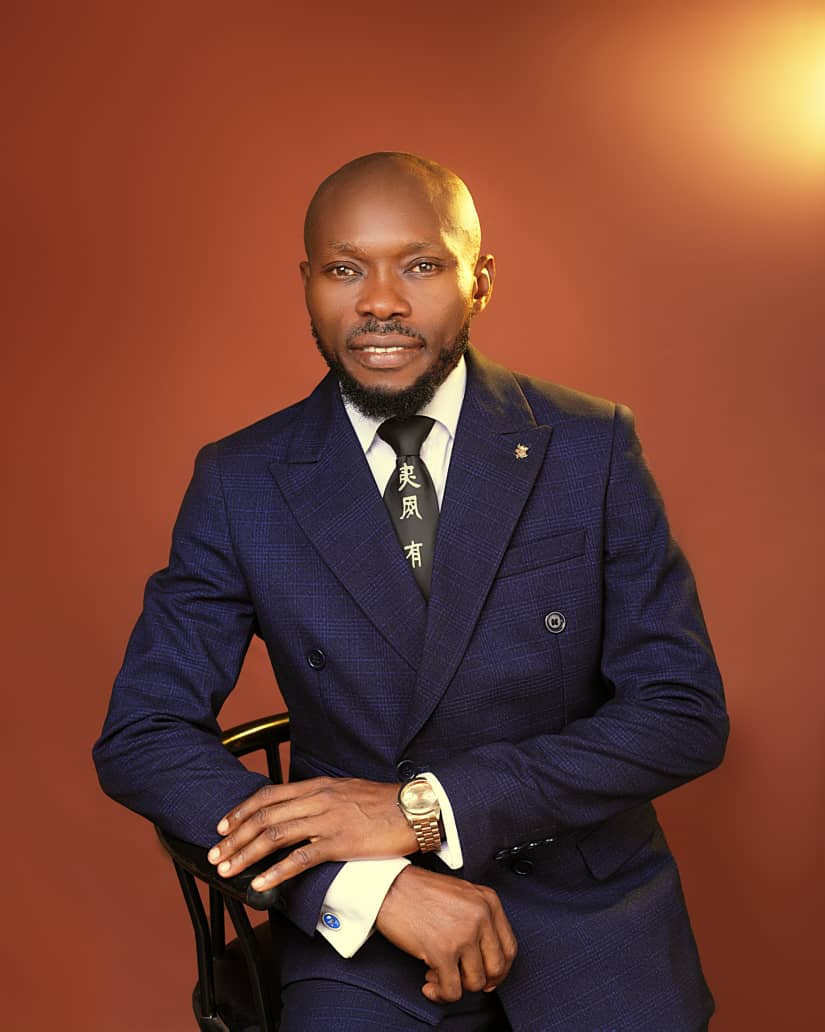

By:Rotarian Funso Jide Adekunle
Public Policy Analyst and Political Strategist. Industrial Relation Expert and Historian
The issue of Nigeria’s rising public debt should not be reduced to a simple argument over whether the current administration “borrowed too much” or whether the increase is merely the result of inherited liabilities and naira depreciation.

From a public policy and public administration perspective, the more important question is: Why has Nigeria repeatedly found itself in a position where borrowing becomes necessary, what is the quality of the borrowing, and what institutional reforms can prevent the country from entering a permanent debt-and-deficit cycle?
The figure of ₦159.28 trillion is significant, but it is important to put the number in context. The Debt Management Office (DMO) reported total public debt of ₦159.28 trillion as of 31 December 2025, up from ₦153.29 trillion at the end of September 2025. The DMO also noted that the figures are affected by exchange-rate conversion of external debt.
What ₦159.28 Trillion Means
Nigeria’s public debt of ₦159.28 trillion is a serious fiscal issue, but the figure should not automatically be interpreted to mean that the Tinubu administration borrowed the entire amount.
READ ALSO:Smart Boys Movement Celebrates Oyo Youth Agency Chairman, Falana, at Birthday
Public debt includes domestic and external obligations, inherited liabilities, refinancing arrangements and other recognised government debts.
The important question is therefore not only how much Nigeria owes, but what the money was borrowed for, how efficiently it was used, the cost of servicing it and whether the economy can generate enough revenue to repay it.
Borrowing for productive infrastructure can stimulate economic growth. Borrowing repeatedly to finance recurrent expenditure, deficits and inefficient government structures creates a much more dangerous situation.
Why the Debt Increased
Finance Minister Taiwo Oyedele has identified naira depreciation and inherited liabilities as major reasons for the increase.
There is merit in this argument.
When the naira loses value against the dollar, Nigeria’s external debt becomes more expensive when converted into naira. For example, a $1 billion debt valued at ₦500/$ is ₦500 billion, but at ₦1,500/$ it becomes ₦1.5 trillion in naira terms—even though Nigeria did not borrow another $1 billion.
Nigeria also inherited substantial Ways and Means obligations and other liabilities, while some existing debts have been refinanced or securitised.
Therefore, not every increase in the naira value of public debt represents fresh borrowing by the present administration.
But Government Must Do More
While these explanations are valid, they should not become an excuse for weak fiscal discipline.
Nigeria’s debt problem also reflects long-standing problems involving:
Weak revenue mobilisation;
Excessive recurrent expenditure;
Expensive governance;
Poor budget implementation;
Project duplication;
Weak procurement controls;
Fiscal leakages; and
Inadequate accountability.
READ ALSO:Olaoluwa Congratulates Onipapa on 64th Birthday, Prays for Long Life, Successful Reign
Therefore, the debate should not be reduced to “Tinubu caused the debt” versus “Tinubu inherited the debt.”
The more important question is:
What is this administration doing to ensure that Nigeria does not continue accumulating unsustainable obligations?
Nigeria’s Bigger Problem: Revenue
In my view as a student of Public Policy and Administration, Nigeria’s fundamental problem is not simply debt, it is weak fiscal capacity.
Government expenditure has consistently exceeded what government can comfortably generate from sustainable domestic revenue.
When revenue is insufficient, government normally has to increase revenue, reduce expenditure or borrow.
Nigeria has relied heavily on borrowing.
The sustainable solution is therefore to increase productive economic activity, broaden the tax base, reduce leakages and improve revenue collection, rather than continuously borrowing to cover fiscal gaps.
Costly Governance
Nigeria also operates an expensive governance system.
The country has numerous ministries, departments, agencies, political appointments and overlapping government functions.
The answer, however, is not simply indiscriminate reduction of government workers.
Government should conduct a public expenditure and institutional efficiency review to determine:
Which agencies are necessary;
Which functions are duplicated;
Which institutions can be merged;
Where technology can reduce administrative costs; and
Which expenditures produce measurable public value.
The principle should be:
Government must spend more on outcomes and less on bureaucracy.
Budget Discipline
Nigeria needs greater discipline in the way its budgets are prepared and implemented.
Frequent supplementary budgets, poorly coordinated projects and off-budget obligations can make it difficult for citizens to understand the government’s actual financial position.
The country needs a stronger connection between:
Development Plan → Budget → Revenue → Borrowing → Expenditure → Results.
Every major borrowing should clearly state:
How much is being borrowed, why it is needed, what project it will finance and how the resulting obligation will be repaid.
Debt Service Is the Real Danger
The most important issue is not necessarily the size of the debt alone.
The real concern is Nigeria’s ability to service that debt from its revenue.
If an increasing proportion of government revenue goes towards interest and principal repayments, less money remains for:
Education;
Healthcare;
Infrastructure;
Security;
Social protection; and
Economic development.
This is why Nigeria must focus on both debt management and revenue growth.
A country can have a moderate debt-to-GDP ratio but still experience serious fiscal stress if its revenue base is weak.
What Tinubu Has Gotten Right
A balanced analysis must recognise some of the reforms undertaken by the Tinubu administration.
The removal of the petrol subsidy addressed a major fiscal burden, although it created significant short-term economic hardship.
The foreign-exchange reforms were also intended to correct distortions and improve market efficiency.
The administration has additionally pursued tax and revenue reforms.
However, these reforms must ultimately be judged by their outcomes.
Economic reforms cannot be considered successful simply because they increase government revenue. They must also improve productivity, employment, purchasing power, investment and citizens’ welfare.
What Government Must Improve
I would recommend seven immediate priorities:
Borrowing discipline:
Every new loan should have a clear economic justification and repayment strategy.
Reduce waste:
Government should eliminate unnecessary duplication and excessive administrative expenditure.
Increase revenue:
Expand the tax base and improve compliance without excessively burdening existing taxpayers.
Improve procurement:
Public contracts should be transparent, competitive and independently monitored.
Track projects:
Citizens should be able to know how much was budgeted, how much was spent and whether the project was completed.
Strengthen debt management:
Government should carefully manage interest rates, maturity periods, refinancing risks and foreign-currency exposure.
Publish debt information:
Nigeria should maintain a public debt dashboard showing borrowing, repayment obligations, interest costs and projects financed.
My Preferred Solution
I would recommend a National Fiscal Responsibility Compact for 2026–2030 built around six principles:
Debt discipline — borrow responsibly.
Revenue expansion — increase sustainable domestic revenue.
Expenditure efficiency — eliminate waste and duplication.
Productive investment — prioritise infrastructure, education, healthcare, agriculture, power and industrial development.
Transparency — make borrowing and spending information publicly accessible.
Accountability — require measurable results from government expenditure.
The objective should not merely be to reduce the debt figure.
It should be to create a fiscal system where:
Government earns more → spends better → borrows less → invests productively → grows the economy → creates jobs → expands revenue.
My Position
As a student of Public Policy and Administration and a public-policy analyst, my position is neither automatically pro-government nor anti-government.
I accept that naira depreciation, inherited liabilities, Ways and Means obligations and refinancing have contributed significantly to the increase in Nigeria’s debt.
But explaining the increase is not the same as solving the problem.
The Tinubu administration inherited a difficult fiscal situation, but it must now demonstrate that its policies are capable of changing the trajectory.
The argument should therefore move beyond:
“Who caused Nigeria’s debt?”
To:
“What institutional reforms will prevent Nigeria from continuously borrowing to finance its government?”
That is the real public-policy question.
The Central Argument
Nigeria does not have only a debt problem.
Nigeria has a broader public-finance and governance problem.
The country needs to move from borrowing-led governance to revenue-led, productivity-driven development.
Government must:
Earn more, spend better, borrow responsibly and deliver measurable value.
The ₦159.28 trillion debt figure should therefore serve as a warning to government and citizens, not merely as a political weapon.
The Tinubu administration should be judged not simply by how convincingly it explains the debt it inherited, but by whether it can build institutions capable of ensuring that Nigeria borrows less, earns more, spends better and delivers more value to Nigerians.
That, in my view, is the essence of responsible public policy and fiscal governance.