
By Ibrahim Kegbegbe
Customers of Polaris Bank across Nigeria are grappling with persistent disruptions affecting the bank’s mobile application and related digital services, in a development that is raising broader concerns about the reliability of electronic banking platforms in the country.

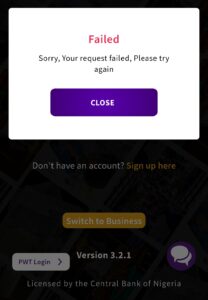
Independent checks by The Merit Newspaper confirmed repeated transaction failures on the bank’s mobile application, with users encountering error messages while attempting basic operations. Since Friday, April 24, 2026, many customers have reported being unable to complete routine transactions such as transfers, airtime purchases, and bill payments, often receiving the message: “Sorry, your request failed, please try again.”
“I’ve been trying to send money since yesterday, but the app keeps failing,” said Jamiu Adekunle. “It’s frustrating because I depend on it for urgent transactions.”
The situation, according to findings, is not isolated. Earlier in the month, around April 10, customers experienced similar service interruptions that lasted several days before normal operations were restored. For some account holders, the recurrence suggests a deeper, unresolved issue within the bank’s digital infrastructure.
A review of customer experiences since the beginning of 2026 points to a pattern of intermittent glitches and prolonged downtimes. As digital banking adoption continues to rise nationwide, such disruptions are beginning to test customer confidence in platforms designed to support Nigeria’s transition toward a cashless economy.
READ ALSO:PDP Crisis: Supreme Court Delay Threatens 2027 Elections
In Lagos, the challenges extend beyond mobile applications. A customer, who requested anonymity, said he visited four different branches in an attempt to obtain an Automated Teller Machine (ATM) card but was repeatedly told there was “no network,” preventing the issuance of the card. “I went to four branches, and they all told me the same thing—no network,” he said. “It’s exhausting.”
Although the ATM-related incident was reported in Lagos, multiple customer accounts suggest that service challenges may be more widespread, affecting users in different parts of the country. The convergence of mobile app failures and in-branch service limitations has compounded the inconvenience faced by customers.
Efforts to reach Polaris Bank for official comments included calls and electronic correspondence to its customer service channels, but no response had been received as of press time. The situation underscores the growing need for transparency, responsive communication, and stronger infrastructure as Nigerian banks navigate increasing dependence on digital financial services.