

Editorial | The Merit Newspaper
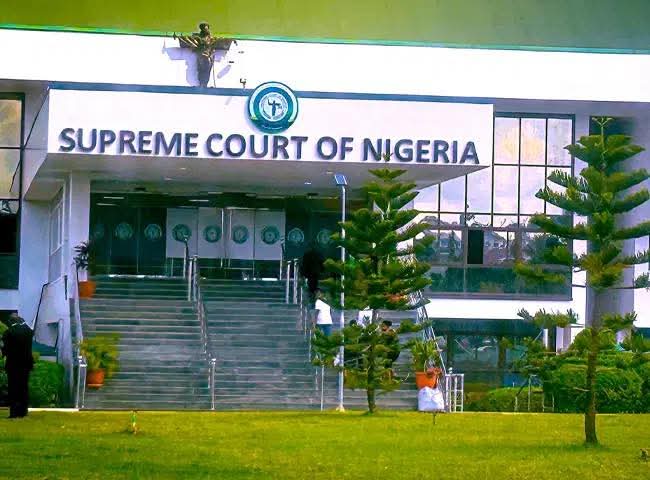
On Wednesday, April 22, 2026, Nigeria’s apex court reserved judgment in the Peoples Democratic Party (PDP) leadership dispute stemming from its contentious 2025 Ibadan convention. Six days later—on April 28—there is still no communication to counsel on a judgment date. In ordinary litigation, that silence is procedural. In this case, it is a matter of politics—and potentially, an existential one.

At the centre of this unfolding tension is not just a party crisis, but a constitutional collision between judicial timelines and electoral deadlines set by the Independent National Electoral Commission.
How Long Can a Reserved Judgment Take?
Legally, there is no fixed number of days within which the Supreme Court must deliver judgment after reserving it in a non-election matter. While Section 294 of the Constitution prescribes timelines for lower courts, the Supreme Court operates with broader discretion in practice, especially on appeals involving:
multiple consolidated suits,
constitutional questions, and
politically sensitive disputes.
In reality, judgments may come:
within 2–4 weeks in urgent or straightforward matters,
within 1–3 months in moderately complex appeals,
or even longer where opinions must be harmonised among Justices.
The PDP case falls squarely into the high-complexity, high-stakes category, making a rushed judgment unlikely unless external urgency—such as electoral timelines—forces judicial acceleration.
April 28 Reality: A Dangerous Silence
As of today, April 28, the absence of a judgment date signals one of three possibilities:
Deliberations are ongoing and not yet concluded
The Justices may still be writing and reconciling their opinions, especially if there are strong disagreements.
A lead judgment exists but concurring/dissenting opinions are pending
This often delays final delivery, particularly in politically sensitive cases.
Strategic judicial caution
The court may be aware of the political implications and is proceeding carefully to avoid a judgment that could destabilise the system.
READ ALSO:Sanwo-Olu Not Resigning, Lagos Counters Viral Report
None of these scenarios, however, align comfortably with the ticking clock imposed by INEC.
INEC’s Timetable: Law Without Flexibility
The Independent National Electoral Commission has fixed:
April 23 – May 30, 2026: Party primaries
May 10, 2026: Submission of membership registers
These are not advisory dates—they are statutory deadlines. INEC has consistently maintained that failure to comply could result in exclusion from the ballot.
This creates what can best be described as a legal purgatory:
The PDP cannot conclusively act without clarity on its legitimate leadership.
The court has not yet provided that clarity.
INEC’s clock is running regardless.
Likely Judicial Timing: Reading the Signals
Given the stakes, three realistic timing scenarios emerge:
1. Accelerated Judgment (Before May 10)
This would allow the PDP to:
validate leadership,
submit membership registers,
and proceed with primaries.
Likelihood: Moderate, but only if the court prioritises urgency.
2. Mid-Window Judgment (Between May 10 and May 30)
Here, the PDP may:
miss the membership register deadline,
But still attempt primaries depending on the ruling.
Risk: Legal challenges to candidates’ validity.
3. Delayed Judgment (After May 30)
This is the most dangerous scenario.
If the court orders:
fresh congresses or a new convention,
The PDP would likely miss INEC’s primary deadline entirely.
Consequence: Potential exclusion from the 2027 general elections ballot—a catastrophic outcome for a major opposition party.
Possible Outcomes of the Judgment
The Supreme Court’s decision will likely fall into one of these categories:
A. Affirmation of Current Leadership
Stabilises the party immediately
Enables compliance with INEC deadlines
Restores political momentum
Best-case scenario
B. Nullification with Immediate Replacement
The court recognises an alternative leadership faction
May still allow compliance if the structure is intact
Moderately disruptive
C. Nullification Requiring Fresh Processes
Orders new congresses or conventions
Logistically impossible within the INEC timeline
Worst-case scenario
The Broader Democratic Implication
This is no longer just a PDP problem. It is a systemic issue:
Should judicial timelines override electoral participation rights?
Should INEC deadlines accommodate ongoing litigation?
Or must political parties bear the consequences of internal disorder?
The silence of the court as of April 28 is not unusual in law—but in politics, it is deafening.
READ ALSO:Peter Obi Meets Jonathan, Sparks 2027 Speculation
A Race Against Two Clocks
The PDP is caught between the slow clock of justice and the fast clock of electoral law. If the Supreme Court does not deliver judgment within the narrow window before critical INEC deadlines, the consequences may extend beyond one party—to the health of Nigeria’s multiparty democracy itself.
In the end, the question is not just when the judgment will come, but whether it will come in time to matter.