By Ibrahim Kegbegbe
London, UK -November 12, 2026

Sometimes, a single photograph tells a political story that would otherwise require several pages of historical documentation.
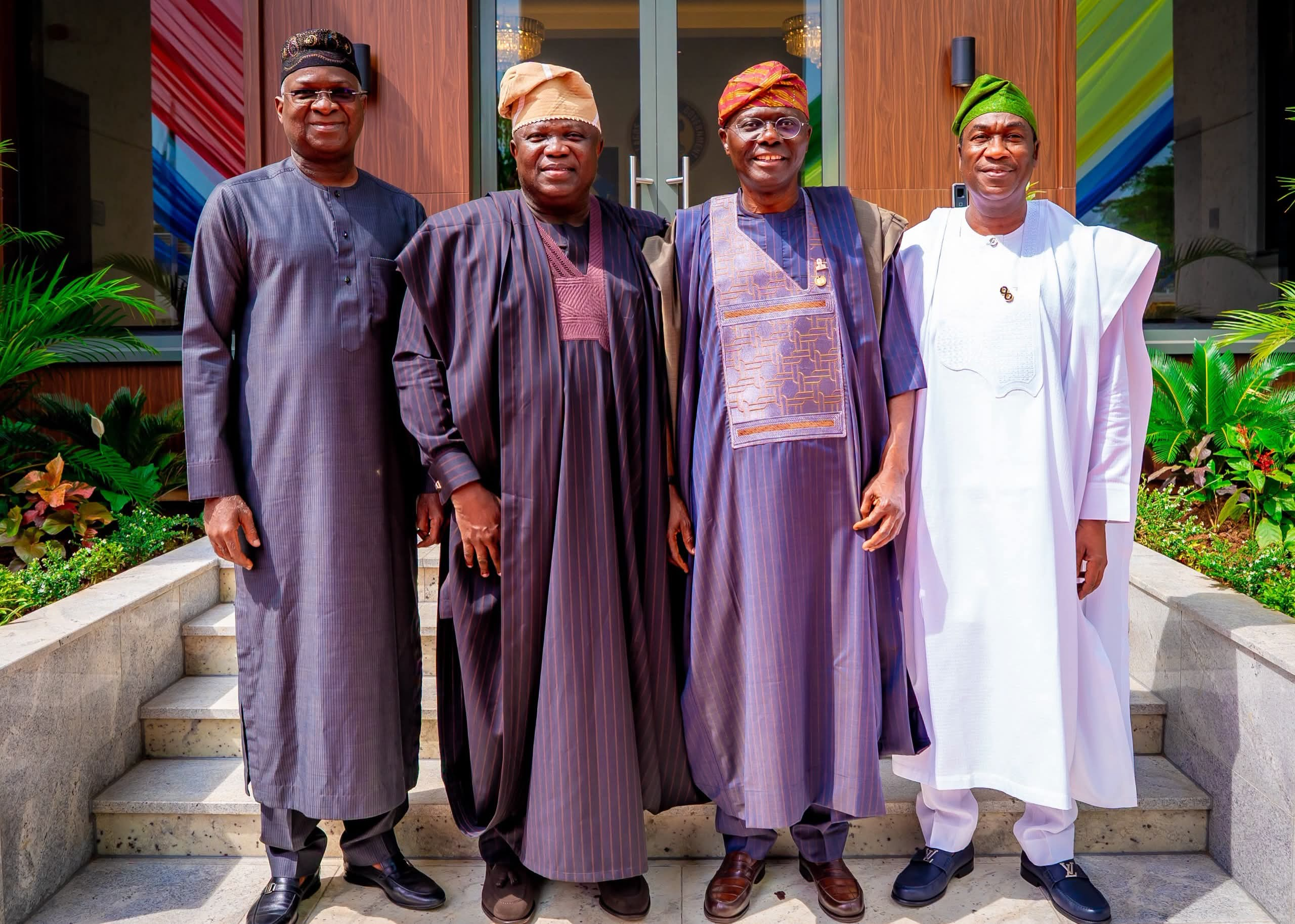
The photograph featuring former Lagos State Governor Babatunde Raji Fashola, former Governor Akinwunmi Ambode, incumbent Governor Babajide Sanwo-Olu and Deputy Governor Dr Kadri Obafemi Hamzat captures an interesting moment in the evolution of Lagos State’s political leadership.
It brings together three successive governors and a deputy governor whose political journey has now placed him at the centre of the 2027 governorship conversation.
Since the return to democratic governance in 1999, Lagos has witnessed different administrations, each contributing to the state’s development in its own way.
Bola Ahmed Tinubu established the political and administrative foundation of the current political era between 1999 and 2007. Babatunde Fashola succeeded him and governed for eight years, from 2007 to 2015, building on that foundation while pursuing an ambitious infrastructure and urban development agenda.
Akinwunmi Ambode followed Fashola in 2015. Although his administration lasted only one term, his contributions to Lagos’ infrastructure, road construction, transportation and public facilities remain part of the state’s governance history.
In 2019, Babajide Sanwo-Olu took over the leadership of the state. His administration subsequently secured a second term in 2023, extending its tenure until 2027.
Now, attention is gradually shifting towards the next chapter, with Deputy Governor Dr Kadri Obafemi Hamzat emerging as the APC’s governorship candidate for the 2027 election.
Why Hamzat’s Candidacy Is Significant
One important aspect of Hamzat’s political journey is that his experience in Lagos governance did not begin with his appointment as deputy governor.
He previously served as Commissioner for Science and Technology under the Tinubu administration and later held the position of Commissioner for Works and Infrastructure during the Fashola administration.
This means his exposure to Lagos governance cuts across three administrations: Tinubu, Fashola and Sanwo-Olu.
His experience provides an interesting basis for examining his potential contribution to the next phase of Lagos development.
Furthermore, his seven-year working relationship with Sanwo-Olu has placed him within the state’s executive decision-making structure, exposing him to the complexities of managing a megacity with enormous economic opportunities and equally significant infrastructure, transportation, housing and environmental challenges.
His candidacy therefore raises an important governance question: should Lagos prioritise continuity of existing policies, introduce a fresh development direction, or combine both approaches?
The Importance of Continuity and Innovation
Lagos is not a state that can afford to approach governance without understanding its institutional history.
Its growing population, commercial importance, infrastructure demands and position as Nigeria’s economic hub require leadership with a clear understanding of the state’s development priorities.
READ ALSO:Tinubu Celebrates Emir of Ilorin on 31 Years on Throne
Hamzat’s experience across previous administrations offers a foundation for institutional continuity. However, continuity must not mean preserving everything without evaluation.
The next administration will have to confront unfinished projects, improve public transportation, address housing challenges, strengthen healthcare and education, improve security and make economic opportunities more accessible to ordinary residents.
It will also have to demonstrate that the benefits of Lagos’ economic growth can reach communities beyond the state’s commercial centres.
These are the issues against which any candidate seeking to govern Lagos in 2027 should be assessed.
A Photograph, A Political Journey and A New Possibility
The photograph is particularly interesting because it captures different generations of Lagos political leadership in one frame.
Fashola represents the administration that followed Tinubu. Ambode represents the next phase after Fashola, while Sanwo-Olu represents the administration that succeeded Ambode.
Hamzat, standing within this historical arrangement, represents the possibility of a different development in Lagos’ political succession: a sitting deputy governor seeking to move directly into the governorship.
READ ALSO:Court Rejects Nafiu Bala’s Resignation Letter in ADC Crisis
His candidacy also presents an opportunity for Lagosians to examine the advantages and limitations of having a prospective governor who has participated in the state’s executive administration for several years.
Ultimately, the 2027 governorship election will provide Lagos residents with an opportunity to evaluate the candidates, their records, their policy proposals and their understanding of the challenges facing the state.
One thing, however, is certain about the photograph: it captures an important chapter in Lagos’ political history, while reminding observers that every administration inherits responsibilities from the one before it.
The next chapter of Lagos governance will be defined not merely by who succeeds the incumbent, but by the quality of leadership, ideas and measurable development delivered to its people.