

By Ibrahim Kegbegbe
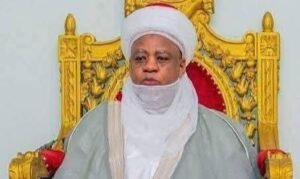
The announcement of Eid al-Fitr in Nigeria has once again sparked debate among Nigerian Muslims, particularly regarding the method used by the Sultan of Sokoto in determining the sighting of the crescent moon. This year, the Sultan’s announcement aligned with Saudi Arabia’s, leading to questions about whether Nigeria should independently verify moon sightings within its borders or rely on external reports.
The fundamental question remains: Did the Sultan specify any state in Nigeria where the crescent was sighted, or was his declaration solely based on Saudi Arabia’s announcement? In contrast, countries like Egypt, Morocco, Oman, and Ghana have declared that Eid al-Fitr 2025 will be observed on Monday, March 31, due to the inability to sight the crescent within their respective territories. These nations rely on independent astronomical observations, prioritizing their local visibility criteria over foreign proclamations. Why, then, is Nigeria not following the same approach?

The Islamic Perspective on Moon Sighting
Islam is a religion deeply rooted in knowledge and empirical evidence. The determination of Eid in the time of Prophet Muhammad (peace be upon him) was based on local moon sightings. According to a hadith narrated by Abdullah ibn Umar, the Prophet said:
“Do not fast until you see the crescent and do not break your fast until you see it. If it is cloudy, then complete thirty days of Sha’ban.” (Sahih al-Bukhari 1909, Sahih Muslim 1081).
This hadith underscores the principle of direct observation in determining the Islamic lunar calendar. There is no record of the Prophet instructing the people of Medina to follow the moon sighting of Makkah, despite both cities being in close proximity. Instead, the sighting of the crescent was confirmed locally.
Further supporting this, another hadith narrated by Kurayb details a scenario where Ibn Abbas rejected a report of moon sighting from Syria, stating: “This is how the Messenger of Allah commanded us.” (Sahih Muslim 1080). This incident establishes that independent moon sighting was practiced during the Prophet’s time and was not dictated by another region.
The Need for a Nigerian-Based Lunar Determination
Given this strong precedent, the question arises: Should Saudi Arabia dictate Nigeria’s religious calendar? If Saudi Arabia is the determinant, why have powerful Islamic nations such as Egypt and Morocco not adhered to its announcement? These countries, known for their profound Islamic scholarship, insist on verifying moon sightings within their own borders.
From a scientific standpoint, the moon’s visibility varies based on geographical location, atmospheric conditions, and other factors. The International Astronomical Center and other global lunar sighting bodies confirm that the crescent cannot always be seen simultaneously in all countries. This justifies why different nations sometimes celebrate Eid on different days.
For instance, Egypt, Morocco, and Ghana have announced that Eid al-Fitr 2025 will be celebrated on March 31 due to the inability to sight the crescent within their territories. Similarly, Oman follows its independent moon sighting criteria, ensuring its calendar aligns with verified local observations. If these nations, despite their deep-rooted Islamic traditions, maintain an independent stance, why should Nigeria continue to rely on Saudi Arabia’s declaration?
In the modern era, technological advancements such as telescopic observation and astronomical calculations provide more accurate predictions of the moon’s visibility. However, these tools should complement, rather than replace, physical moon sightings as prescribed in Islamic jurisprudence.
Moving Forward: Establishing an Independent Moon Sighting Committee
The reliance on Saudi Arabia for moon sighting decisions undermines Nigeria’s autonomy in Islamic jurisprudence. To address this, the Nigerian Supreme Council for Islamic Affairs (NSCIA) should establish a well-structured National Moon Sighting Committee composed of astronomers, Islamic scholars, and field observers in all states.
Furthermore, Nigeria should adopt a standardized method for reporting moon sightings, ensuring transparency and credibility. This can be achieved by:
1. Setting up observatory centers across the country.
2. Training scholars and volunteers to document moon sightings.
3. Collaborating with reputable Islamic institutions and astronomers to verify reports.
Islamic traditions emphasize empirical verification, and Nigeria, as a sovereign nation, should prioritize local moon sighting rather than relying on Saudi Arabia’s declaration. By adopting an independent approach, Nigeria will align with Islamic teachings, strengthen its religious institutions, and ensure that its Muslim population follows an authentic and verifiable lunar calendar.
As the Quran states: “And We have made the night and the day as two signs, then We have obliterated the sign of the night and made the sign of the day visible, that you may seek bounty from your Lord and that you may know the number of the years and the reckoning…” (Surah Al-Isra 17:12).
This verse further supports the necessity of using local observation to determine time-based religious obligations. It is time for Nigeria to uphold this tradition, ensuring that Eid celebrations are based on legitimate, independent lunar sighting methods.