By Ibrahim Kegbegbe
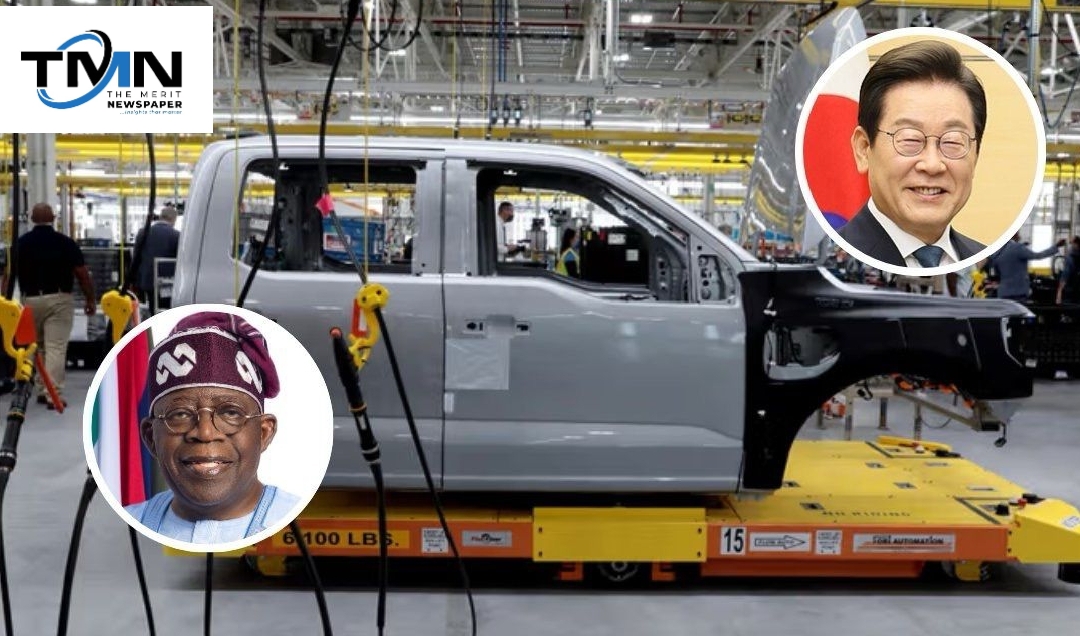
Nigeria has signed a landmark agreement with South Korea to establish what is being described as Africa’s first large-scale electric vehicle (EV) manufacturing factory, in a move expected to boost industrial development, create jobs, and position the country as a hub for green technology on the continent.

The agreement was formalised through a Memorandum of Understanding (MoU) between the Federal Government of Nigeria and South Korea’s Asia Economic Development Committee (AEDC). The MoU was signed in Abuja by the Minister of State for Industry, Senator John Enoh, and the Chairman of AEDC, Mr. Yoon Suk-hun.
According to officials, the project will be implemented in phases, beginning with the assembly of electric vehicles using imported components, before progressing to full local manufacturing of vehicle parts and batteries as capacity develops.
When fully operational, the electric vehicle plant is projected to produce up to 300,000 vehicles annually and generate about 10,000 direct and indirect jobs, cutting across engineering, manufacturing, logistics, and supporting industries.
READ ALSO:Councillors’ Forum Endorses Tinubu’s 2027 Re-election Bid, Cites Grassroots Reforms
Speaking on the significance of the deal, government officials said the partnership aligns with Nigeria’s broader industrialisation agenda and efforts to reduce reliance on imported vehicles, which has continued to place pressure on the country’s foreign exchange reserves.
The Merit Newspaper reports that the project is also expected to support Nigeria’s transition to cleaner energy and environmentally friendly transportation, as electric vehicles produce lower emissions compared to conventional petrol-powered cars.
The National Automotive Design and Development Council (NADDC) noted that the collaboration would encourage technology transfer, skills development, and local capacity building in advanced automotive manufacturing.
Beyond vehicle production, the agreement includes plans to support the development of electric vehicle charging infrastructure across Nigeria, a key requirement for the widespread adoption of EVs in the country.
The deal builds on recent efforts by the Federal Government to promote electric mobility, including incentives and financing schemes aimed at making electric vehicles more affordable for consumers and businesses.
Industry analysts say the Nigeria–South Korea partnership could place Nigeria at the forefront of Africa’s electric vehicle market, while also opening doors for further foreign investment in manufacturing and clean energy technologies.
READ ALSO:Customs, Traditional Rulers Tackle Border Security, Welfare in Ipokia
While challenges such as power supply and infrastructure remain, stakeholders believe the project represents a major step toward diversifying Nigeria’s economy and strengthening its position in the global automotive value chain.