By Ibrahim Kegbegbe
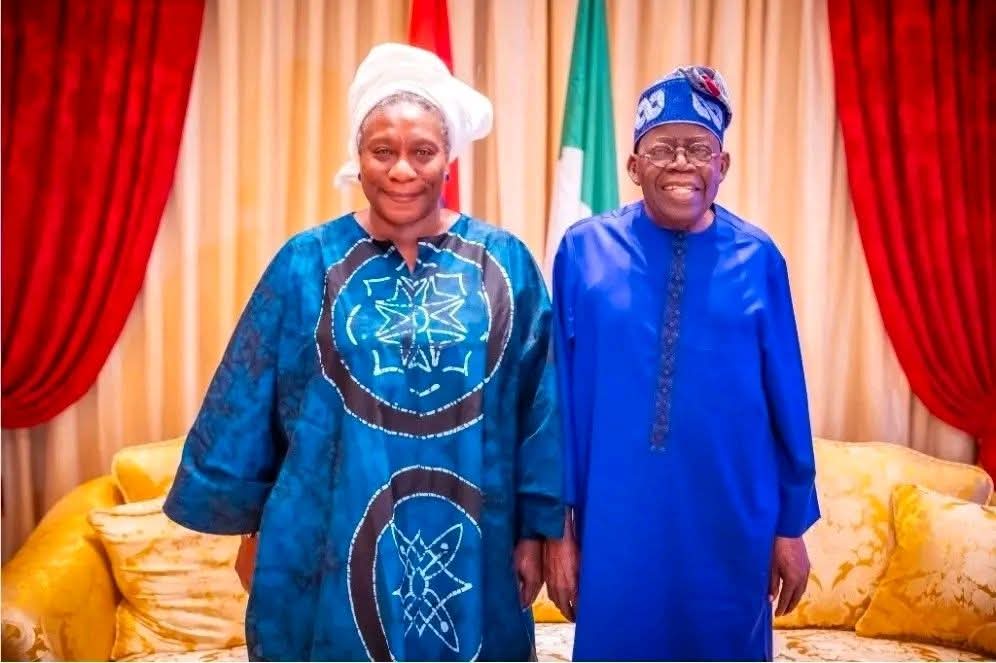
In the complex chessboard of Ogun State politics ahead of the 2027 governorship election, one name appears strategically positioned regardless of how the final game unfolds — Iyabo Obasanjo‑Bello.
While major contenders like Solomon Olamilekan Adeola (popularly called Yayi) continue to build momentum for the top seat under the platform of the All Progressives Congress (APC), a silent but powerful political calculation may already be tilting the equation in favour of Iyabo Obasanjo-Bello—not necessarily as governor, but as the most politically valuable deputy governorship material.
This possibility may not just be about gender balancing or senatorial district considerations. It may also be about political legacy, influence, and the invisible hand of one of Nigeria’s most enduring political figures — Olusegun Obasanjo.
The Unwritten Political Formula in Ogun Politics
Ogun State politics has historically followed an unwritten but observable formula built around three major factors:
Senatorial balance
Political structure
Influence of legacy power brokers
Senator Adeola currently represents Ogun West, while Iyabo Obasanjo-Bello comes from Ogun Central — the same political bloc that has often played kingmaker in state elections.
If APC eventually zones the governorship to Ogun West, political logic would naturally demand a strong Ogun Central figure as deputy. If the ticket goes elsewhere, the same logic could still favour Iyabo as a stabilizing political bridge.
This is where her advantage becomes obvious.
The Obasanjo Factor: The Political Elephant in the Room
Whether openly admitted or quietly denied, it would be politically naive to ignore the continuing influence of former President Olusegun Obasanjo in Ogun political calculations.
Even outside partisan politics, Obasanjo remains:
A moral authority in Ogun politics
A national power broker
An international statesman whose voice still carries weight
A silent consensus builder among political elites
Iyabo Obasanjo-Bello’s political identity cannot be separated from this reality. While she has her own political credentials, including her tenure representing Ogun Central in the Senate between 2007 and 2011 under the Peoples Democratic Party (PDP), the psychological advantage of the Obasanjo name remains a factor no serious political strategist would ignore.
In Nigerian politics, influence is not always about direct endorsement. Sometimes, it is about the quiet calculations politicians make to avoid being on the wrong side of history.
Why Governor May Be Uncertain, But Deputy Looks Strategically Possible
Realistically speaking, the Ogun 2027 governorship race is crowded with strong male political heavyweights with established structures, financial war chests, and deep grassroots networks.
This makes Iyabo’s path to the number one seat more competitive.
However, politics is rarely about absolute victory. It is often about strategic positioning.
And this is where the deputy governorship path may become her strongest route to relevance.
From a political strategy standpoint, she offers:
Gender inclusion advantage
Ogun Central political balancing
Elite political acceptability
Legacy name recognition
Administrative experience
Negotiation value within APC power blocs
In fact, choosing her as deputy could become a consensus-building move capable of reducing intra-party tension.
The Gender Card APC Cannot Ignore
Nigeria’s evolving political climate is gradually rewarding parties that project inclusiveness. Selecting a female running mate with national recognition could give APC a narrative advantage.
Iyabo Obasanjo-Bello fits into that narrative without being politically inexperienced.
Her selection could be marketed as:
Reward for experience
Promotion of women in governance
Political reconciliation across factions
A bridge between old and new political structures
The Silent Negotiations That May Decide Everything
Ogun politics has never been decided purely on public declarations. The real decisions often happen in private consultations, elite negotiations, and strategic alignments.
If history is any guide, the final APC ticket may reflect compromise more than competition.
READ ALSO:AjadiOyoOmituntun 3.0: Grassroots Walkout, Consultations Boost Ajadi’s Oyo Governorship Momentum
And in compromise politics, figures like Iyabo often become inevitable choices.
Not necessarily because they won the loudest campaigns—but because they fit the most political equations.
The Shock Scenario That May Eventually Happen
If APC chooses Senator Solomon Yayi or any other strong male aspirant as its governorship candidate, a scenario many insiders already consider possible is this:
Iyabo Obasanjo-Bello emerging as the consensus deputy governorship candidate capable of:
Strengthening elite confidence
Appeasing Ogun Central interests
Adding legacy credibility
Projecting political maturity
Such a move would not be accidental. It would be strategic.
Politics of Possibility, Not Probability
While her chances of becoming Ogun governor may still depend on many unpredictable variables, her chances of becoming politically indispensable may be stronger than many observers currently admit.
In politics, the most powerful position is sometimes not the one you contest first — but the one the system eventually finds difficult to ignore.
And as Ogun 2027 approaches, one controversial but realistic question may continue to echo in political circles:
Will Iyabo Obasanjo-Bello become governor?
Maybe.
Will she become deputy governor if APC chooses another candidate?
That possibility may be stronger than many are willing to publicly admit.
Because in Ogun politics, influence still speaks — and the Obasanjo name still echoes.