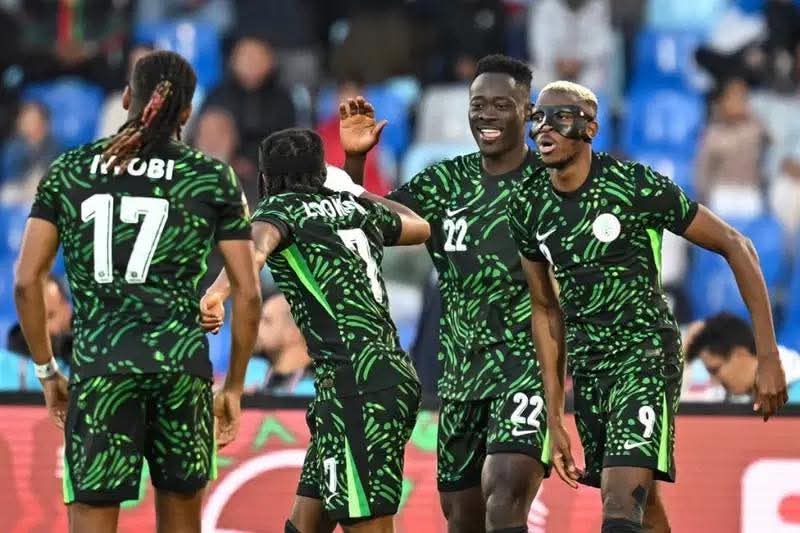

By Ibrahim Kegbegbe
For decades, the Super Eagles of Nigeria have been celebrated for flair, resilience and raw talent. From dazzling wing play to commanding midfield performances, Nigerian football has never lacked ability. Yet, in recent years, a recurring weakness has continued to haunt the national team at crucial moments: penalty shootouts.
This weakness has now grown beyond coincidence. It has become a pattern—one costly enough to derail Nigeria’s ambitions on the biggest stages of African and global football.

During the World Cup qualifying campaign, Nigeria’s hopes were shattered after a tense encounter with the Democratic Republic of Congo that ended in penalties. When the pressure peaked and composure was required most, Nigeria faltered. DR Congo held their nerve, converted from the spot, and progressed—while Nigeria watched another World Cup dream fade away.
Painfully, history repeated itself at the ongoing Africa Cup of Nations (AFCON) in Morocco. In the semi-final clash against the host nation, Morocco, the Super Eagles once again found themselves in a penalty shootout. And once again, Nigeria failed to rise to the moment. Morocco triumphed from the spot, advancing to the final and leaving Nigeria to reflect on what might have been.
Two major tournaments. Two decisive penalty shootouts. Two exits.
At this point, it is no longer a question of luck. It is a matter of preparation, psychology and strategy.
Penalty shootouts are not merely about kicking a ball from twelve yards. They are about confidence, mental strength, routine, and belief. Nations that consistently succeed in shootouts—such as Morocco, Egypt, Argentina, and even Croatia on the global stage—treat penalties as a science, not a gamble. They train for them deliberately, repeatedly, and under simulated pressure.
Sadly, Nigeria does not.
The Nigeria Football Federation (NFF), the technical crew, and team managers must accept an uncomfortable truth: penalty preparation has been neglected. Training sessions often focus on open play, tactics, and fitness, while penalties are treated as an afterthought—something to be handled “if it happens.” But modern football no longer allows such assumptions.
In major tournaments, knockout games are increasingly decided by penalties. Ignoring this reality is equivalent to tactical negligence.
If the NFF truly desires progress and consistency from the Super Eagles, then penalty shootouts must become a core part of team development. Coaches should introduce structured penalty training, assign specialist penalty takers long before tournaments begin, and work closely with sports psychologists to prepare players for high-pressure moments. Goalkeepers, too, must be trained in reading body language and penalty patterns—skills that now define elite modern keepers.
More importantly, players must grow up believing that Nigeria can win penalties—not fearing them.
This is not a call for excuses, nor an attempt to diminish the team’s effort. The Super Eagles have shown courage and quality in open play. But football rewards those who prepare for every scenario, especially the toughest ones.
Nigeria has the talent. Nigeria has the passion. What is missing is the discipline to master the details.
Until the Super Eagles learn how to consistently win from the penalty spot, the nation risks watching more tournaments slip away—not because Nigeria is weaker, but because it is less prepared.
READ ALSO:Nigeria Is Not Broke, Nigerians Are
And in football, preparation often makes the difference between heartbreak and history.