
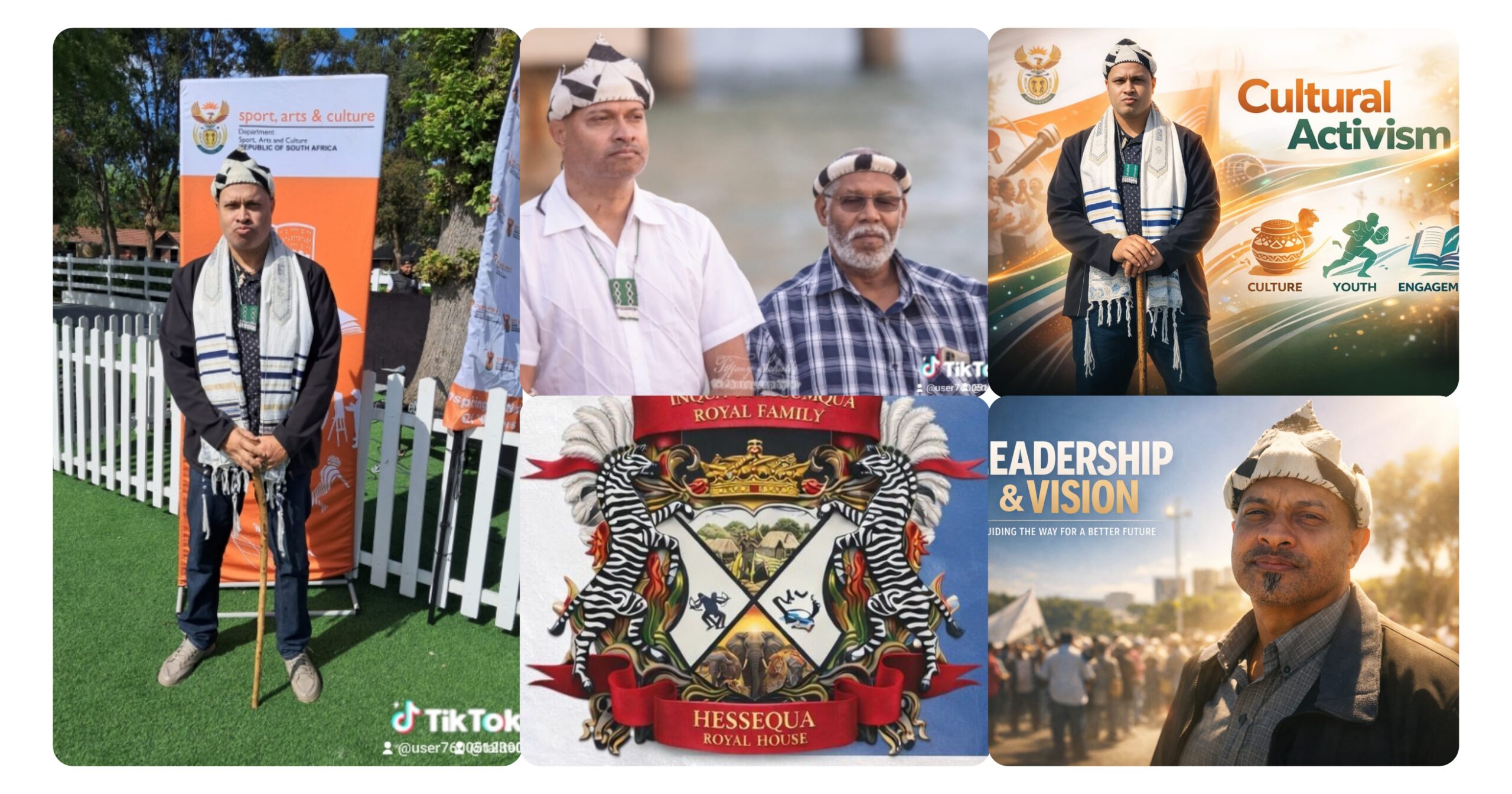

By Ibrahim Kegbegbe
LAGOS / CAPE TOWN — As concerns mount over renewed xenophobic tensions in parts of South Africa, a royal voice has emerged calling for calm, unity, and a deeper understanding of the issues fueling the unrest.

In an exclusive telephone interview with The Merit Newspaper on Wednesday, May 6, 2026, Prince Talito Solomons, heir to King Henry Goukou Solomons II of the Inqua Hamcumqua Hessequa Royal Kingdom, offered a nuanced perspective on the situation, insisting that South Africa remains a welcoming home for Africans while acknowledging the complexities driving recent attacks.

“South Africa is a home for all Africans,” Prince Solomons said. “The government caters for all Africans who are engaged in legal activities because equality, justice, and sustainability are what the government stands for.”
READ ALSO:CNN Founder Ted Turner Dies at 87
His remarks come amid reports of sporadic violence in parts of KwaZulu-Natal (KZN) and Johannesburg, where foreign nationals—particularly from other African countries—have often been targeted during periods of economic strain and social tension. However, the prince was quick to clarify that the unrest is not widespread across the country.

“The xenophobic attacks are majorly taking place in KZN and Johannesburg, but not in Cape Town,” he noted, suggesting that the situation varies significantly by region.
READ ALSO:PDP Crisis Deepens as Makinde Bloc Defies Wike
A Complex Narrative
While condemning violence, Prince Solomons also pointed to underlying concerns among local communities, particularly regarding criminal activities allegedly linked to a minority of foreign nationals.
“The ongoing xenophobic attacks are on some foreign nationals who are engaging in human trafficking and other illegal activities like drug smuggling,” he said. “This does not represent all Africans living in South Africa.”

His comments reflect a broader debate within the country, where economic inequality, unemployment, and crime often intersect with migration issues. Analysts have long argued that xenophobic sentiments in South Africa are fueled not only by prejudice but also by competition for limited resources in townships and urban centers.

South Africa, one of Africa’s most industrialized nations, has historically attracted migrants seeking better economic opportunities. Yet, periodic outbreaks of xenophobic violence—most notably in 2008 and 2015—have cast a shadow over its image as a regional hub.
READ ALSO:Ajadi Congratulates CSP Iteyere on Retirement
Government Response
According to Prince Solomons, authorities are taking steps to address the situation through law enforcement and policy measures.
“The government is looking into deporting those who are involved in illegal activities, while also ensuring justice, safety, and rights for all Africans who are law-abiding,” he said.
This dual approach—cracking down on crime while protecting legitimate residents—has been a recurring strategy by South African officials attempting to balance public safety with constitutional protections for migrants.
A Call for African Unity
Beyond the immediate crisis, the royal heir used the platform to advocate for a broader vision of continental unity and cooperation.
“I personally have brothers and sisters all over the African continent,” he said. “I want to reach out to other royal kingdoms in Nigeria and Kenya to discuss unity and progress, and also how corruption can be eradicated in Africa.”
Prince Solomons, who is expected to succeed his father, emphasized the importance of traditional institutions in fostering dialogue and strengthening ties across African nations.
“I am still the successor to my father, but I believe this is the time to build bridges across Africa—not just politically, but culturally and socially,” he added.
Looking Ahead
As South Africa grapples with the latest wave of tensions, voices like Prince Solomons’ highlight the need for balanced narratives—ones that condemn violence without ignoring underlying socio-economic realities.
For many observers, the path forward lies in addressing root causes: unemployment, inequality, and weak cross-border regulatory frameworks—while reinforcing the ideals of pan-African solidarity.
Whether through government action or traditional diplomacy, the prince’s message is clear: Africa’s future depends not on division, but on unity.
“Unity and justice must guide us,” he said. “That is the only way forward for South Africa and the African continent at large.”