
By Ibrahim Kegbegbe
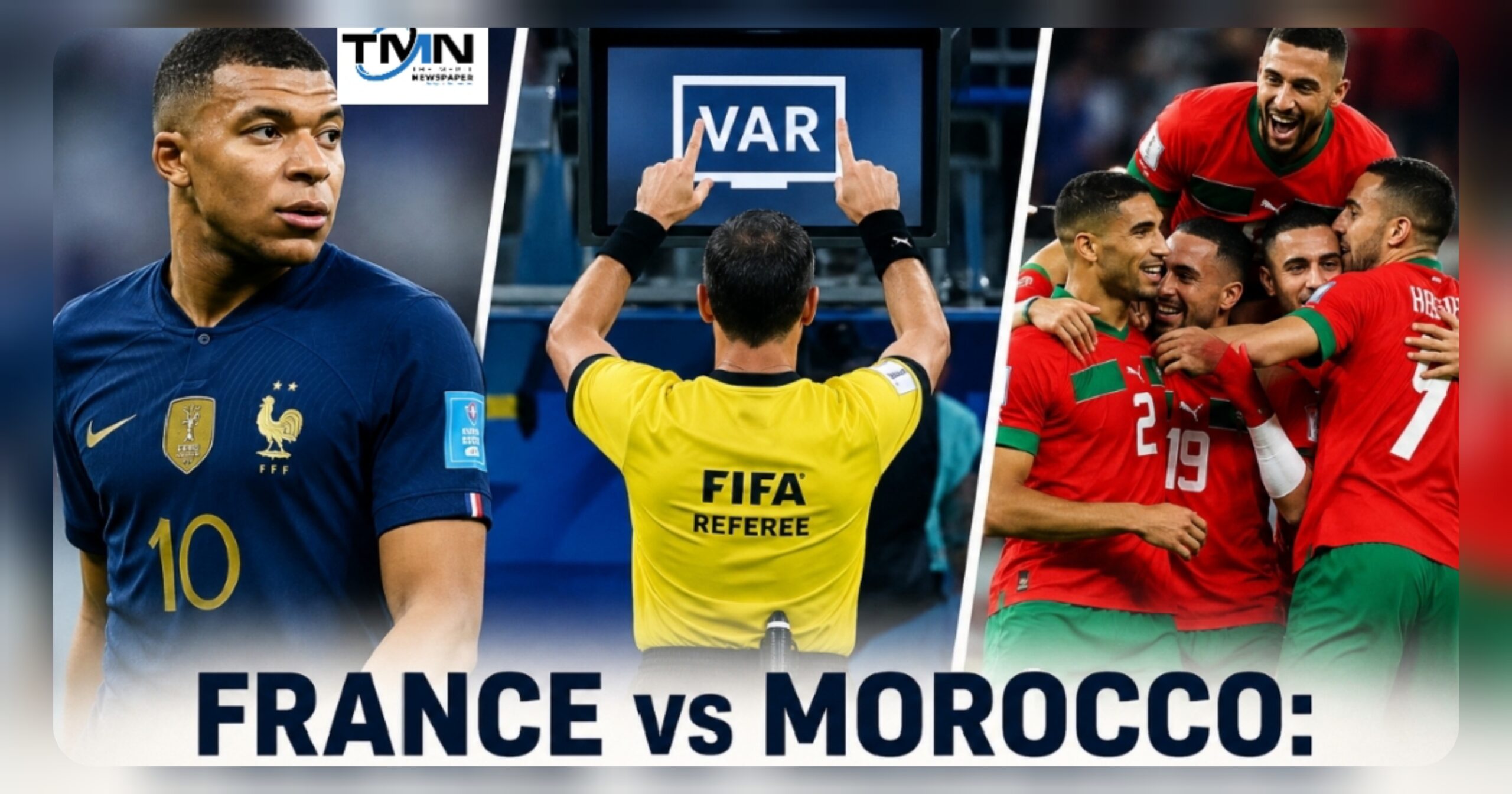
Today’s FIFA World Cup quarter-final between France and Morocco is about more than a place in the semi-finals. It is a test of FIFA’s credibility.

The controversy surrounding the Argentina-Egypt Round of 16 match has left many football supporters, particularly across Africa, questioning whether every team truly receives equal treatment on football’s biggest stage. Social media has been flooded with accusations of inconsistent officiating, while the Egyptian Football Association has formally challenged aspects of the refereeing.
Whether FIFA agrees with those criticisms is almost beside the point. Once millions of supporters begin to doubt the fairness of officiating, football has a credibility problem.
That is why all eyes will be on not only Kylian Mbappé but also Morocco’s stars. They will also be the referee and the VAR officials.
FIFA must understand that another highly controversial decision involving an African team would be disastrous for the image of this World Cup. If Morocco become victims of questionable officiating today, the outrage that followed the Egypt-Argentina match could seem minor by comparison.
African supporters are no longer willing to accept explanations after the final whistle. They want consistency during the match—not selective intervention when it changes the outcome.
If a foul deserves to stop play, stop it immediately. If an offside deserves review, review every similar incident. If VAR exists to eliminate injustice, then it must not become a tool that appears active for one team and passive for another.
Football cannot survive on the perception that some nations receive the benefit of every close call while others must simply accept their fate. Even if such perceptions are unfounded, FIFA has a responsibility to ensure its officiating is consistent enough that confidence in the competition is maintained.
READ ALSO:World Cup: Argentina Rally Past Egypt, Switzerland Eliminate Colombia
Today’s France-Morocco clash is therefore more than a football match. It is a credibility test for FIFA.
If France qualifies fairly, the football world will applaud them. If Morocco qualifies on merit, it should receive the same respect. But if the headlines tomorrow are once again dominated by refereeing controversies rather than football, FIFA will have failed both teams and millions of supporters watching around the world.
The World Cup should be remembered for moments of brilliance—not for debates about whether the referee influenced the result.
Today, FIFA has an opportunity to prove that the game belongs equally to Europe, Africa, Asia, the Americas and Oceania.
The referee’s whistle must decide the match according to the Laws of the Game—not according to a narrative that leaves one side believing justice was denied.