By Ibrahim Kegbegbe
The ongoing national convention of the newly formed Nigeria Democratic Congress (NDC) in Abuja took a significant political turn on Saturday as the party officially resolved to zone its 2027 presidential ticket to the Southern region of Nigeria, while also assuring Northern stakeholders of an immediate power rotation back to the North after the tenure.

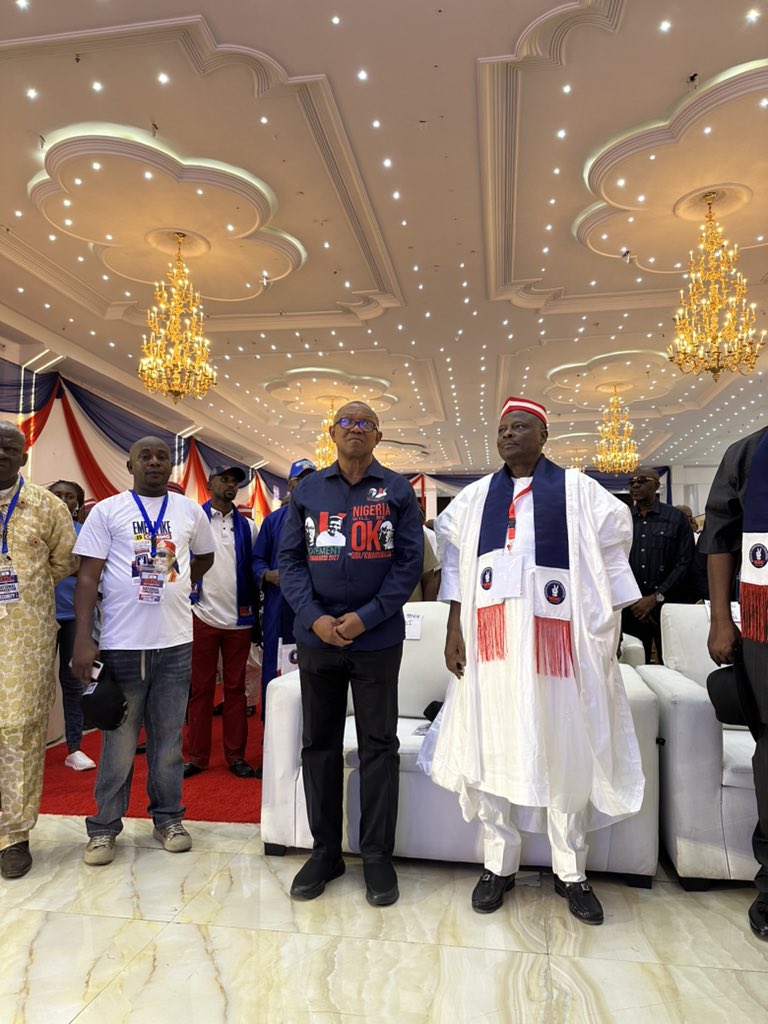
The decision, announced before party delegates, political leaders, and supporters at the convention venue in Abuja, was described by party officials as a strategic move aimed at strengthening national unity, balancing political interests, and promoting inclusiveness within the country’s evolving democratic space.
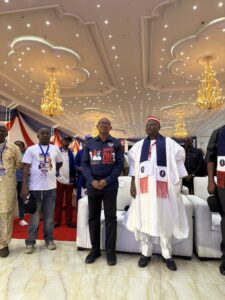
The announcement was made in the presence of prominent opposition figures, including former Anambra State governor Peter Obi and former Kano State governor Rabiu Musa Kwankwaso, whose attendance further heightened political interest surrounding the convention and the future direction of the coalition movement.
READ ALSO:Iroko Heritage Global Services Limited Unveils KING’S BUSH BAR AND LOUNGE
According to party insiders, the zoning arrangement is expected to serve as a framework for stability within the NDC ahead of the 2027 general elections, particularly amid growing national conversations around equity, fairness, and power-sharing between the Northern and Southern regions of the country.
In a statement released during the convention, the OBI-KWANKWASO NATIONAL SOLIDARITY MOVEMENT (OBIKWAN 2027) congratulated the leadership of the NDC for what it described as a “bold and unifying decision.”
The statement, signed by the Convener of the movement, Hon. Chukwudike Abraham, noted that the resolution reflects the spirit of justice and national cohesion needed to reposition Nigeria politically and economically.
“We stand firmly in support of this resolution as we prepare for greater service to the Nigerian people,” the group stated.
READ ALSO:NDC Convention Faces Legal Storm Over INEC Notice
Political observers believe the development could reshape alliance negotiations among opposition blocs ahead of the 2027 elections, especially as conversations continue around the possibility of a broader coalition capable of challenging the ruling establishment.
The Merit Newspaper reports that Nigeria’s political history has long been influenced by an informal power-sharing arrangement between the North and South, a principle often referred to as zoning. The arrangement gained stronger prominence after the return to democratic rule in 1999, with major political parties adopting rotational leadership to preserve national balance and reduce regional tensions.
The debate around zoning intensified following the 2023 presidential election, where political actors and regional groups expressed divergent opinions over which part of the country should produce Nigeria’s next president. Analysts say the NDC’s latest decision appears designed to calm internal anxieties while also attracting support from both regions.
Although the party is yet to officially unveil potential presidential aspirants, Saturday’s resolution is expected to trigger fresh political calculations among major opposition figures and stakeholders across the country.
READ ALSO:APC Moves Against Long-Serving Lagos Lawmakers
The convention is also expected to deliberate on constitutional amendments, party structure, membership expansion, and strategies for coalition-building ahead of the next electoral cycle.
More resolutions and outcomes from the convention are expected to be released by the party leadership in the coming days.