
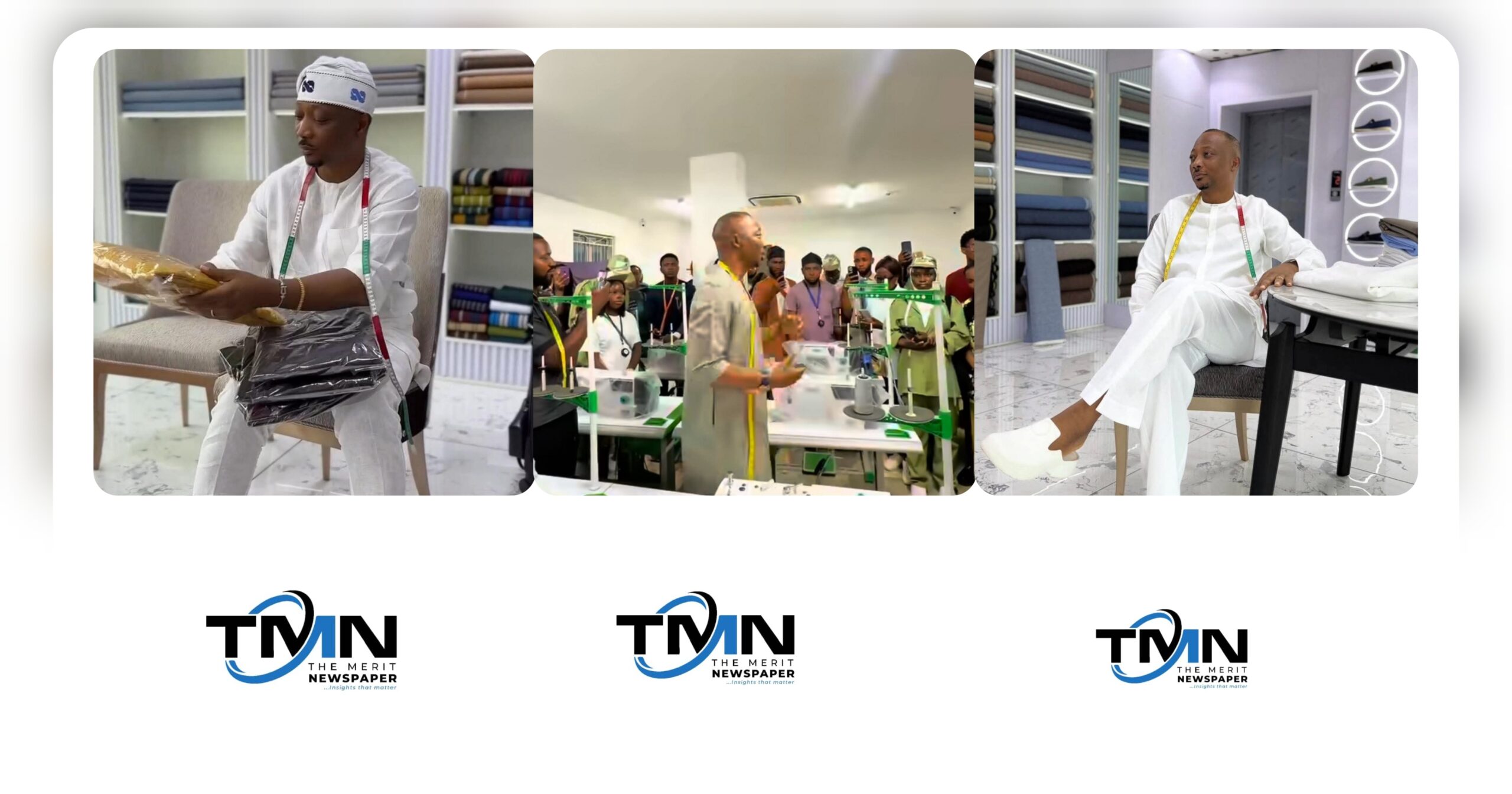

By Ibrahim Kegbegbe
When Nigerian fashion mogul Seyi Vodi jokingly declared that customers from all political camps — APC, PDP and Labour Party — would continue to patronise his brand, it may have sounded like a light-hearted social media moment. But beneath the humour lies a deeper truth about survival, success, and the mindset Nigerian youths urgently need to embrace.

In a country where politics often dominates conversations, timelines, and even friendships, many young people are increasingly trapped in the illusion that political loyalty is a substitute for economic power. Yet, while they argue online and defend politicians who may never know them, real wealth is being built quietly by those who understand one simple principle: business comes before politics, and value outlives political loyalty.
Seyi Vodi’s statement, though playful, captures that reality in a striking way — a reminder that in the marketplace of life, it is not political affiliation that sustains a brand, but relevance, skill, and consistent value creation.
Beyond the humour of that social media post lies a serious national conversation that many young Nigerians must confront.
In today’s Nigeria, politics has become almost like a religion among many young people. Some have reduced their entire existence to defending politicians online, attacking perceived opponents, and spending valuable productive years chasing political figures for temporary financial rewards. Yet, the same politicians many youths fight over already have their own businesses, careers, investments, and sources of livelihood outside politics.
READ ALSO:Suleiman Kawu Emerges Kwara PDP Governorship Candidate
That is why the message behind Seyi Vodi’s post deserves serious reflection.
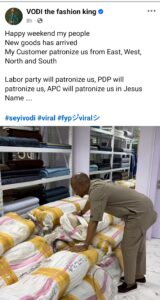
Despite being publicly associated with influential political figures, including his friendship with Seyi Tinubu, Seyi Vodi operates with a business philosophy that cuts across political divides. A successful entrepreneur cannot afford to hate customers because of their political affiliations. Fashion, like most businesses, is not built on sentiment — it is built on service, demand, and consistent delivery. APC supporters, PDP supporters, Labour Party supporters, and politically indifferent customers all become part of the same market when value is clearly defined.
That mindset is one of the reasons Vodi has built one of Nigeria’s most recognisable fashion empires.
His journey is also a powerful reminder that success is rarely linear. After studying Geology at the University of Maiduguri, he reportedly faced setbacks in the formal job market, including failing a bank employment test. During his National Youth Service Corps programme in Akwa Ibom State, he turned to tailoring — starting modestly by sewing shirts and boxers for fellow corps members using his NYSC allowance. From those humble beginnings, he built what is today a thriving fashion empire serving Nigeria’s political elite, celebrities, and corporate leaders across party lines.
There is a lesson in that transformation: opportunity often favours those who are willing to start small, adapt quickly, and focus on value creation rather than status chasing.
Nigeria’s youths must begin to see politics as a civic responsibility, not a substitute for personal ambition. Supporting a political party is not wrong. Participating in governance is essential in any democracy. Citizens must hold leaders accountable and contribute meaningfully to national development. However, politics should never consume the productive energy that young people ought to invest in education, innovation, entrepreneurship, agriculture, technology, craftsmanship, entertainment, journalism, and vocational development.
READ ALSO:Kwara APC Conducts Nigeria’s Fairest Governorship Primary
The painful reality is that many young Nigerians now know more about political propaganda than financial independence. They spend hours debating politicians online who may never know they exist, while neglecting the development of skills that could transform their lives economically.

Ironically, many of the same political elites being defended aggressively often ensure their own children are educated abroad, trained in professional fields, and positioned within global networks far beyond partisan politics. They understand a fundamental truth: political power is temporary, but economic power is generational.
This is why “stomach infrastructure politics” remains a dangerous culture. A society where youths abandon productivity for short-term political handouts cannot build sustainable prosperity. Temporary empowerment during election cycles cannot replace long-term economic independence.
Seyi Vodi’s journey reinforces another critical truth: value attracts relevance. When individuals develop competence and consistently deliver excellence, opportunities come from all directions. Today, politicians from different parties patronise his brand not because of political loyalty, but because he has built a reputation rooted in quality and trust.
That is how influence should function in a healthy economy.
Young Nigerians must therefore redirect more energy toward building value instead of merely seeking access to political power. The country needs more innovators, skilled artisans, filmmakers, farmers, software developers, writers, journalists, engineers, fashion designers, and manufacturers. The future belongs not to those who shout the loudest in political debates, but to those who create solutions and build systems.
Politics will always remain important, but politics without productivity leads to dependency. A citizen who builds financial stability through legitimate means is more likely to think independently, vote wisely, and contribute meaningfully to democracy than one whose survival depends on political patronage.
Perhaps that is the deeper message hidden inside Seyi Vodi’s humorous post: political parties may differ, but business, talent, and hard work speak a universal language.
And for many Nigerian youths, that remains the most important lesson of all.