By The Merit Newspaper Editorial Board
The governorship primary election conducted by the Kwara State chapter of the All Progressives Congress on May 22, 2026, deserves recognition as one of the most transparent, peaceful, and politically mature direct primaries witnessed in Nigeria’s democratic journey in recent years. Beyond the emergence of the Speaker of the Kwara State House of Assembly, Yakubu Danladi Salihu, as the party’s governorship candidate, the process itself has become a remarkable case study in political accountability, internal democracy, and conflict management within a ruling political party.
For many observers across Nigeria, the outcome of the Kwara APC governorship primary was surprising, not merely because of the final result, but because it demonstrated something rarely seen in contemporary Nigerian politics: the supremacy of party members and stakeholders over predetermined political arrangements.

In the days leading to the exercise, political calculations within Kwara APC appeared settled after Governor AbdulRahman AbdulRazaq publicly endorsed Yahaya Seriki Gambari as his preferred successor. In many political environments across the country, such endorsements often become final verdicts. Party structures usually collapse into silence, delegates become ceremonial, and primary elections transform into mere formalities.
However, what happened in Kwara State was different.
The eventual emergence of Yakubu Danladi Salihu after a keenly contested process reflected a rare democratic correction driven by consultation, negotiation, stakeholder engagement, and political consensus-building. It proved that despite the influence of incumbency, party processes can still produce outcomes shaped by broader participation and internal consultation.
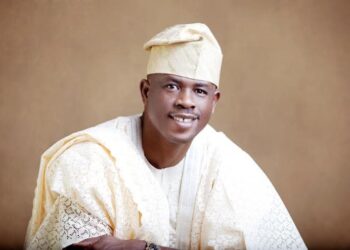
This is why the role played by Musiliu Obanikoro, chairman of the Kwara APC Governorship Primary Election Committee, deserves national commendation.
Across Nigeria in 2026, APC primaries in several states have generated controversies ranging from allegations of imposition and irregularities to parallel congresses, legal disputes, and accusations of manipulation. Yet, the Kwara exercise stood apart because of the firmness, maturity, and political dexterity displayed by the committee under Obanikoro’s supervision.
When the primary election was initially halted on Thursday due to logistical and political concerns, many feared the process could degenerate into chaos. In Nigeria’s political climate, such postponements often create tension, factional violence, and legitimacy crises. Instead, the Kwara committee chose consultation over confrontation.
The reported all-night engagement involving aspirants and stakeholders before the rescheduled Friday exercise demonstrated responsible political leadership. Rather than force an unpopular outcome or impose a divisive process, the committee created room for dialogue, recalibration, and consensus. That singular decision preserved party unity and strengthened confidence in the credibility of the process.
This is leadership.
This is statesmanship.
This is what election management within political parties should represent.
Senator Musiliu Obanikoro’s conduct throughout the exercise projected neutrality, composure, and institutional discipline. His public remarks consistently emphasized peace, participation, and party unity. More importantly, his actions reinforced those words. At a time when many primary election committees across Nigeria have been accused of serving narrow political interests, the Kwara committee under Obanikoro showed that electoral supervision within parties can still command public respect.
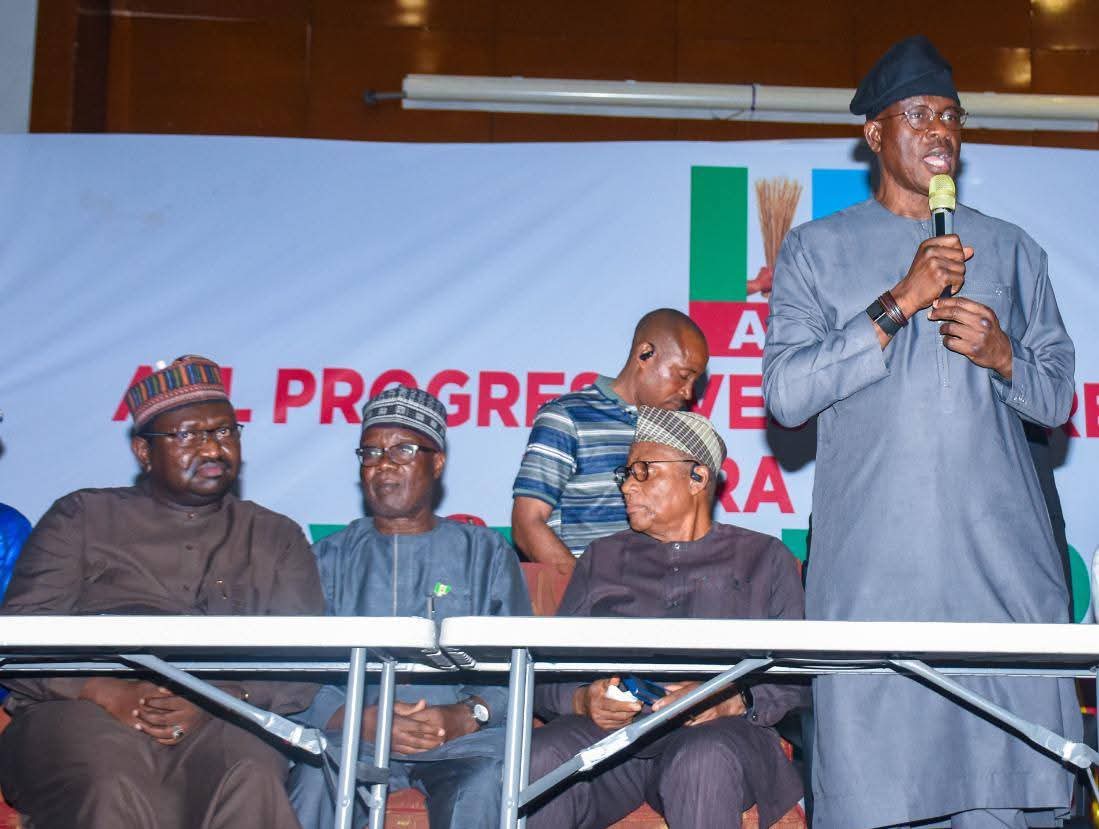
Equally commendable was the peaceful disposition of the aspirants themselves. Fifteen governorship aspirants participated in the contest, yet the process concluded without violence, bloodshed, or destructive factional breakdown. In a country where political ambition sometimes degenerates into bitterness and insecurity, the Kwara APC primary offered a refreshing democratic culture worthy of emulation.
The transparent public declaration of results, with detailed vote counts for all aspirants, further strengthened the integrity of the process. From Yakubu Danladi Salihu’s leading 94,990 votes to the figures recorded by every other contestant, the openness of the announcement helped reduce speculation and suspicion.
The conduct of the exercise also reinforced Kwara State’s longstanding reputation as the “State of Harmony.” While politics elsewhere frequently produces division, Kwara demonstrated that competition and stability can coexist when leaders prioritize institutional order above personal ambition.
Importantly, the Kwara APC primary should not merely be celebrated as a state political event. It should serve as a national lesson for political parties, electoral managers, and democratic institutions across Nigeria.
Internal party democracy remains one of the weakest foundations of Nigeria’s political system. Many electoral disputes that eventually reach the courts originate from poorly managed primaries. Candidate imposition, opaque delegate systems, manipulation of party structures, and disregard for internal processes continue to weaken public trust in democracy.
Kwara’s example offers a different template.
It shows that transparent primaries can strengthen party legitimacy.
It shows that consultations can prevent crises.
It shows that political stakeholders can disagree without destroying their party.
It shows that electoral committees can act independently and responsibly.
Most importantly, it shows that democracy within parties remains possible in Nigeria.
READ ALSO:APC Primary Crisis: Adams Accuses, Elegushi Denies Allegations
As the 2027 general elections approach, the APC leadership at the national level should closely study the Kwara experience. The party must understand that public confidence is not built merely through electoral victories but through the credibility of the processes that produce candidates.
The Merit Newspaper Editorial Board therefore commends the Kwara APC governorship primary election as arguably the most transparent, peaceful, and credible direct governorship primary conducted by the APC anywhere in Nigeria in 2026.
READ ALSO:Danladi Wins Kwara APC Primary With Landslide Victory
The newspaper also recognizes Senator Musiliu Obanikoro as one of the most effective and exemplary primary election committee chairmen deployed by the APC during the current electoral cycle. His handling of the Kwara exercise reflected political maturity, administrative competence, and democratic responsibility.
In a political environment often dominated by cynicism and distrust, the Kwara APC primary restored a measure of public faith in internal party democracy.
For that alone, it deserves national attention.