

By Ibrahim Kegbegbe
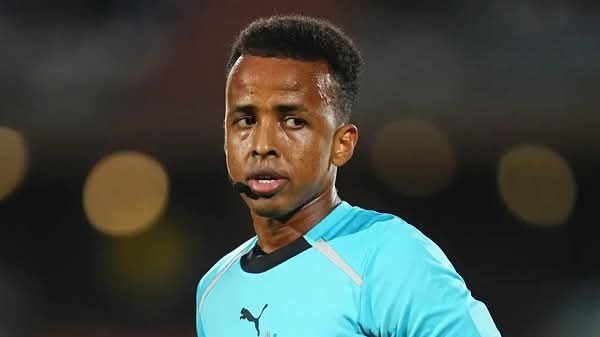
A major controversy has erupted ahead of the 2026 FIFA World Cup following reports that a Somali international referee, Omar Abdulkadir Artan, was denied entry into the United States despite holding a valid visa and being scheduled for official World Cup duties.

According to multiple international media reports, Artan—widely regarded as one of Africa’s rising refereeing talents and previously recognised for his performances in continental competitions—was stopped by immigration authorities upon arrival in the United States, one of the co-host nations of the tournament alongside United States.
The referee, who had been selected under FIFA’s elite officiating programme for the 2026 tournament organised by FIFA, was reportedly informed that he was “inadmissible” following additional screening procedures. However, officials have not publicly disclosed detailed reasons for the decision.
The incident has sparked questions within football and diplomatic circles, particularly given that Artan was believed to have fulfilled all accreditation and visa requirements prior to travel. Sources within the officiating community described the situation as “unexpected and highly unusual,” noting that World Cup match officials typically undergo extensive vetting long before arrival in host countries.
READ ALSO:Married Woman Fakes Kidnap, Found With Lover
Football analysts say the development raises broader concerns about the intersection of sport, immigration policy, and international mobility. The United States, as part of the joint hosting arrangement for the expanded 48-team World Cup, is expected to accommodate thousands of players, officials, journalists, and fans from around the world.
While FIFA has yet to issue a detailed public statement on the specific case, the global football body is expected to seek clarification from U.S. authorities, especially as match officials play a critical role in maintaining the integrity and smooth conduct of the tournament.
In Somalia, the reported incident has triggered disappointment among football supporters who had viewed Artan’s selection as a historic milestone for the country’s presence on the global football stage. Many see his inclusion in the World Cup officiating list as a symbol of progress for Somali football on the international scene.
The Merit Newspaper reports that for now, uncertainty remains over whether the decision is final or subject to administrative review. What is clear, however, is that the controversy has already become one of the earliest flashpoints surrounding the 2026 World Cup, raising questions that extend beyond the pitch.
As preparations continue for what is expected to be the largest World Cup in history, the incident underscores how political and administrative decisions off the field can quickly become part of football’s global narrative on it.