

By Ibrahim Kegbegbe
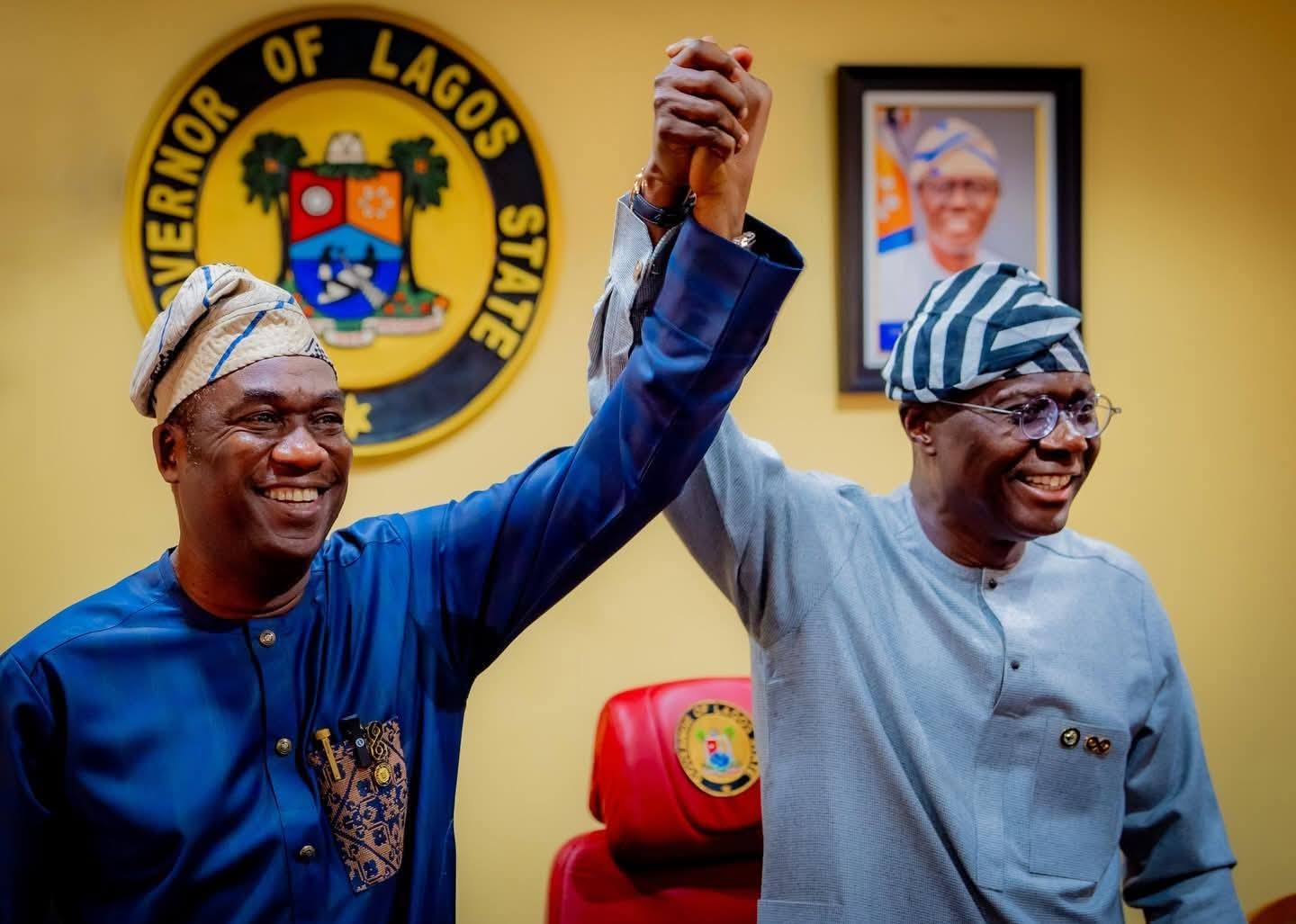
In the ever-evolving theatre of Nigerian politics, where succession battles are often fierce, divisive, and unpredictable, an unusual script appears to be unfolding in Lagos State. Governor Babajide Sanwo-Olu has taken a step that few—if any—sitting governors in Nigeria have dared to take so early and so decisively: openly endorsing his deputy, Kadri Obafemi Hamzat, as the preferred successor ahead of the 2027 gubernatorial race.

This move, if sustained, may well redefine the political culture of succession planning in Nigeria.
A Break from the Norm
Traditionally, Nigerian governors, particularly in politically strategic states like Lagos, maintain calculated ambiguity when it comes to succession. Endorsements—if they come at all—are often delayed until the last possible moment, allowing room for negotiation, alignment of interests, and consolidation of power blocs.
READ ALSO:Seyi Tinubu Resolves Oshodi-Isolo Crisis, Unites APC Leaders
However, Sanwo-Olu’s early and clear backing of Hamzat signals a shift from this entrenched culture. It suggests not only confidence in his deputy’s capacity but also a deliberate attempt to stabilise the political environment within the ruling All Progressives Congress (APC) ahead of what could have been a contentious primary season.
The Weight of Political Consensus
What makes this endorsement even more consequential is the calibre of political heavyweights rallying behind Hamzat. The support of figures such as Mudashiru Obasa, Tajudeen Olusi, and James Abiodun Faleke underscores a rare convergence of interests within the APC hierarchy in Lagos.
Even more striking is the reported withdrawal and alignment of former aspirants like Akinwunmi Ambode and Abdul-Azeez Olajide Adediran (Jandor), suggesting that the party may be coalescing around a consensus candidate far earlier than expected.
In Lagos politics, where internal democracy is often balanced against the need for party cohesion, such unanimity is not accidental—it is engineered. And at the centre of that engineering is the enduring influence of Bola Ahmed Tinubu, whose political machinery has shaped Lagos governance for over two decades.
READ ALSO:Ajadi Congratulates PDP Members, Backs BoT, Urges Unity for 2027 Elections
The Tinubu Factor
Any serious analysis of Lagos politics must acknowledge Tinubu’s towering presence. From his tenure as governor to his current role as President, his imprint on the state’s political architecture remains indelible.
Hamzat’s perceived alignment with Tinubu’s reformist agenda—spanning fiscal restructuring, infrastructural expansion, and social interventions—has further strengthened his candidacy. Policies such as the removal of fuel subsidy, student loan initiatives like NELFUND, and ambitious infrastructure projects like the Lagos-Calabar Coastal Road are part of a broader narrative of continuity that Hamzat is well-positioned to inherit and localise.
Thus, Sanwo-Olu’s endorsement is not occurring in isolation; it fits into a larger ecosystem of political continuity and strategic succession.
Merit, Loyalty, and Technocratic Appeal
Dr Hamzat is not merely a political figure; he is widely regarded as a technocrat with a strong academic and administrative background. His years as Commissioner for Works and Infrastructure before becoming deputy governor gave him hands-on experience in one of Lagos’s most critical sectors.
By endorsing Hamzat, Sanwo-Olu appears to be making a statement: that governance experience, loyalty, and policy continuity should outweigh raw political ambition.
This raises an important question for Nigeria’s democratic evolution—should succession be based on meritocratic continuity or competitive plurality?
READ ALSO:Nollywood Stars Lateef Adedimeji, Mo Bimpe Welcome Triplets
A Double-Edged Sword
While the endorsement may bring stability within the APC, it also invites scrutiny. Critics may argue that early consensus-building risks stifling internal democracy, reducing the primary process to a mere formality.
If Hamzat’s chances are indeed as high as projected, the APC primaries scheduled for May 2026 could become less of a contest and more of a coronation. That perception, whether accurate or not, could have implications for voter engagement and opposition mobilisation.
Yet, proponents would counter that politics is as much about organisation as it is about competition. In a system where fragmented primaries often weaken parties ahead of general elections, early consensus could be seen as strategic foresight rather than democratic compromise.
A Record in the Making
Regardless of where one stands, it is difficult to ignore the historical significance of Sanwo-Olu’s move. If Hamzat eventually emerges as the APC flagbearer and goes on to win the governorship, this moment will be remembered as a turning point—a rare instance where a sitting governor not only endorsed his deputy but successfully orchestrated a seamless transition.
In a country where political succession is often marred by betrayal, litigation, and fragmentation, Lagos may be charting a different course—one rooted in continuity, consensus, and calculated political engineering.
Governor Sanwo-Olu’s endorsement of Dr Obafemi Hamzat is more than a political gesture; it is a statement about the future of leadership in Lagos State. Whether it becomes a model for other states or a subject of democratic debate will depend on how the process unfolds in the months ahead.
For now, one thing is clear: Lagos politics has once again set the pace—and the rest of Nigeria is watching.
Ibrahim Taofeek Kegbegbe is a Lagos-based journalist and public affairs analyst