By Ibrahim Kegbegbe
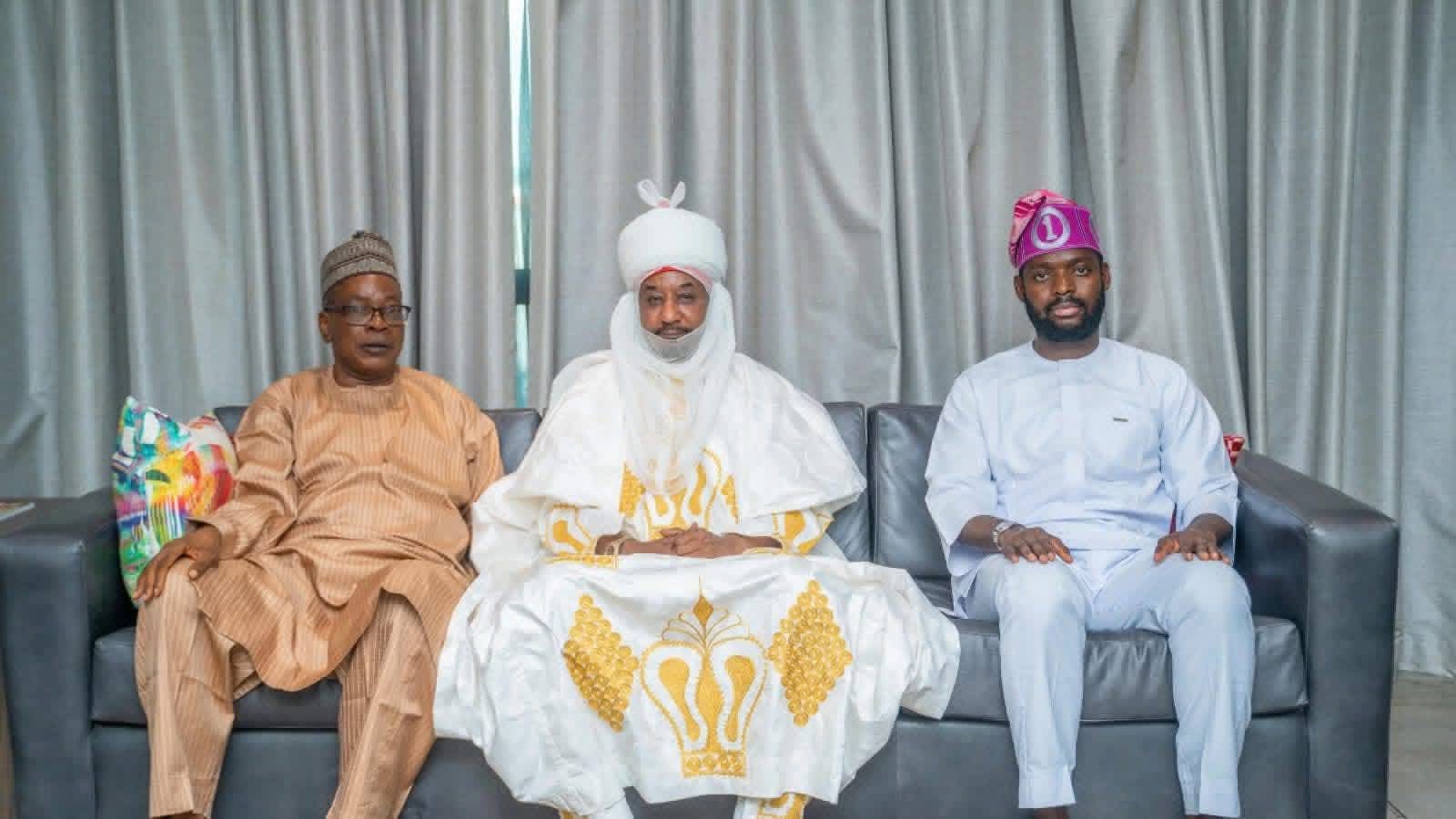
A rare convergence of religious, traditional, and political influence was recently captured in a group photograph featuring renowned Islamic scholar, Sheikh Muhammad Habibullah Adam Abdullah El-Ilory, alongside the Emir of Kano, Sanusi Lamido Sanusi, and the Executive Chairman of Agege Local Government, Abdulganiyu Vinod Obasa.

Although details surrounding the time and venue of the meeting remain undisclosed, the image has sparked interest among observers, given the stature of the personalities involved and their influence across different spheres of Nigerian society.
Sheikh El-Ilory, who heads the influential Markaz Arabic and Islamic Training Centre in Agege, is widely respected for his contributions to Islamic scholarship and religious education. His reported close relationship with Sanusi, a prominent traditional ruler and former Central Bank Governor, underscores a long-standing intellectual and spiritual connection.
Sanusi, known for his outspoken views on governance and socio-economic development, has maintained strong ties with religious leaders across the country, often engaging in discussions that bridge faith, policy, and national progress.
Also present in the photograph, Obasa continues to play a significant role in grassroots governance in Agege. Under his leadership, the local government has been noted for initiatives aimed at fostering community development, inclusiveness, and peaceful coexistence among residents, regardless of ethnic or religious differences.
READ ALSO:Sanwo-Olu Declares Hamzat Best for Job
The Merit Newspaper reports that observers say the coming together of the trio, even informally, reflects the enduring importance of dialogue and collaboration among Nigeria’s religious, traditional, and political leaders—especially at a time when national cohesion remains a critical priority.
READ ALSO:Third Term Resumption: Ajadi Launches Back-to-School Support for 200 Pupils in Ibadan
While no official statement has been issued regarding the meeting, the image itself has become symbolic of unity and shared purpose across key sectors of society.