
By Ibrahim Kegbegbe
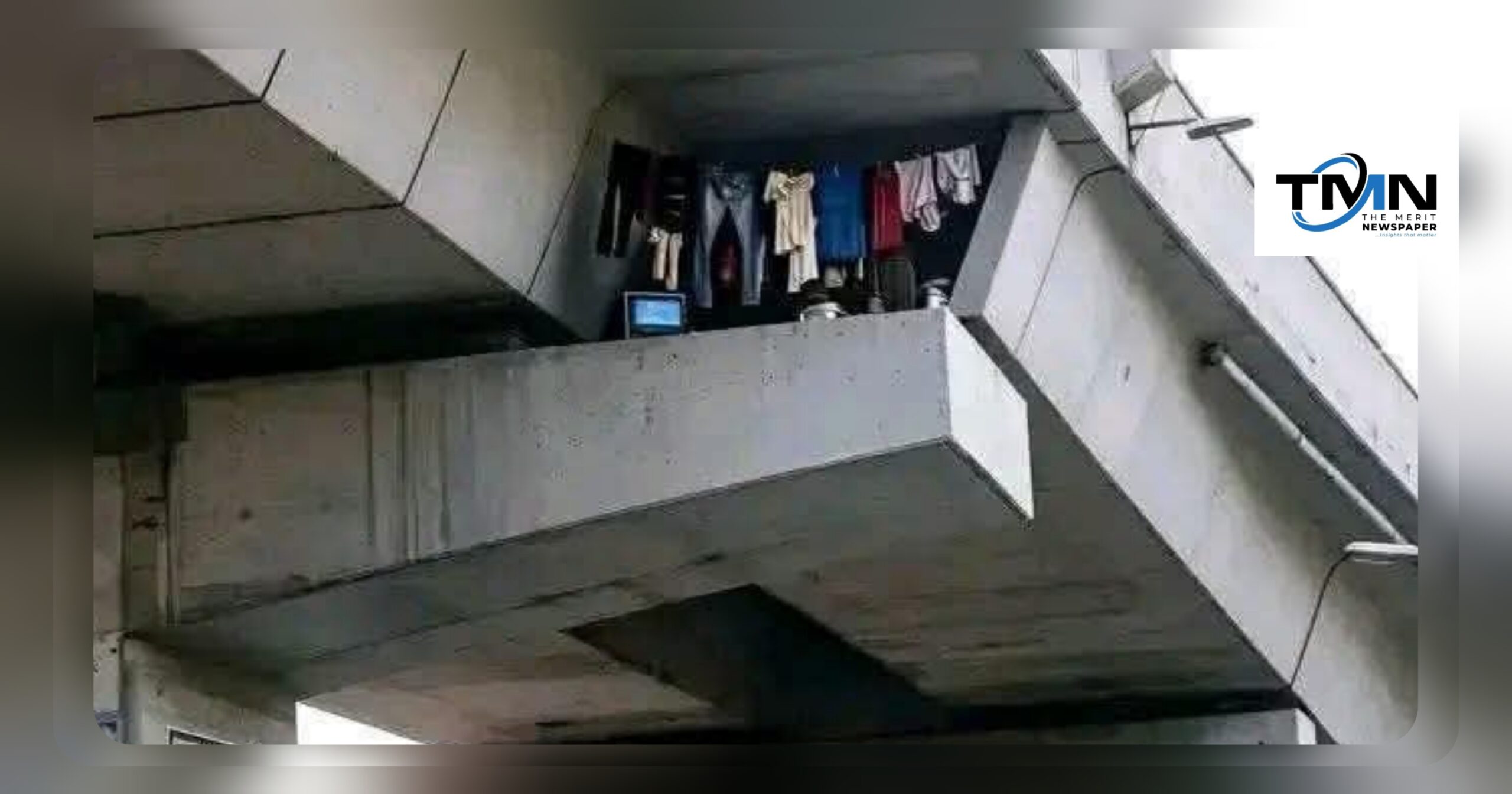
There is a bridge whose exact location remains unidentified, yet its reality is difficult to ignore. Between one of its pillars and the underside of the structure, makeshift ropes hold drying clothes—clear signs that human lives now quietly occupy the space beneath its concrete frame. Further observation suggests an even more unsettling detail: an entry point leading into one of the brick columns, where people appear to have carved out a hidden living space under the bridge’s immediate layer.

This raises a troubling question: has the rising cost of living pushed people beyond the familiar spaces under bridges into even more dangerous and confined layers of survival?
READ ALSO:Why INEC Timetable Crisis May Ruin Political Parties
Traditionally, life under bridges has symbolised urban hardship—temporary shelters for those with nowhere else to go. But what is now unfolding appears to stretch that reality further, into spaces never designed for human habitation at all.
The fear is not abstract. A bridge is engineered for vehicles and weight distribution, not for human settlement within its structural depths. Yet, in the face of economic pressure, survival often overrides caution. Even those who once lived openly under bridges did so with uncertainty; what then can be said of those who now dwell within the very bones of the structure itself?
READ ALSO:2027 Elections: APC Denies Releasing Governorship Primary Results Nationwide
It is a quiet reminder that beyond statistics and policy debates, the cost of living crisis is reshaping not just economies—but the most basic human sense of safety and shelter.