
By Ibrahim Kegbegbe
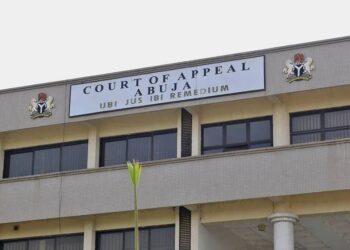
A reported judgement allegedly delivered by Justice M.G. Umar of the Federal High Court, Abuja Division, has sparked widespread debate across Nigeria’s political and electoral landscape, with claims that it nullifies the timetable released by the Independent National Electoral Commission (INEC) for the 2027 general elections.

According to circulating accounts of the judgement, the court is said to have set aside the electoral timetable, a development some political actors interpret as a major shift that could reopen political space for party nominations and allow aspirants to freely switch platforms ahead of the polls.
READ ALSO:Sanwo-Olu Backs Hamzat After APC Primary Vote
If accurate, the implication being drawn by supporters of the interpretation is that political parties may now proceed with nominations and internal processes without being constrained by the previously announced INEC schedule. Some commentators further argue that such a ruling, if upheld on appeal or properly certified, could weaken what they describe as administrative “barriers” in Nigeria’s electoral process.
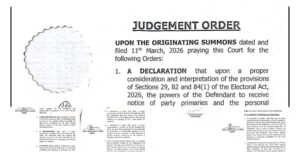
However, as of the time of filing this report, the Federal High Court has not publicly released a certified copy of the judgement, and INEC has also not issued an official response confirming any alteration or nullification of its 2027 election timetable.
The Merit Newspaper reports that legal experts caution that court rulings of this nature are often subject to interpretation until the enrolled order is made available and the precise reliefs granted are clearly established. In Nigeria’s electoral jurisprudence, timetable disputes are typically complex and may involve appeals, stays of execution, or clarification orders.
READ ALSO:APC Ogun Primary Ends Peacefully, Adeola Emerges Candidate
Meanwhile, the alleged ruling has already begun generating mixed reactions within political circles. While some stakeholders are describing it as a boost for internal party democracy and political flexibility, others are warning against premature conclusions, insisting that the electoral framework remains intact until officially overturned through verified judicial documentation.
INEC is expected to address the development once it concludes its review of the reported judgement and its legal implications, if any.
For now, the situation remains fluid, with the authenticity and full scope of the court’s pronouncement yet to be officially confirmed.